
Last updated September 22, 2026
DIY vs Professional ADU: The Los Angeles Homeowner’s Decision Guide
California’s owner-builder exemption allows a homeowner to pull their own construction permits - but it also makes them personally liable for all code compliance and strips them of the contractor protections under B&P Code §7031, including the right to recover damages from unlicensed workers they hire. In Los Angeles, where LADBS processes over 4,000 ADU permits annually, roughly one in five owner-builder applications stalls at plan check for missing documentation, compared to under five percent for professionally submitted packages. This guide maps exactly which ADU scopes an owner-builder can legally pull permits for, what the City of Los Angeles will accept at the counter, and how to price the risk of each path.
Quick Answer
Most Los Angeles homeowners cannot legally complete a full ADU without licensed professionals, because structural engineering stamps and Title 24 energy compliance certification are professional-only requirements regardless of owner-builder status. For the minority who qualify - typically garage conversions under 500 square feet or Junior ADUs - the owner-builder path saves 15-25% on labor but exposes the homeowner to personal liability, insurance gaps, and resale complications that often erase those savings.
Table of Contents
- What California’s Owner-Builder Exemption Actually Covers
- What LADBS Requires at the Permit Counter
- The Three ADU Paths Most Attempted in Los Angeles
- The Liability Transfer: What Changes When You Sign as Owner-Builder
- Cost Comparison: Real Numbers for Los Angeles
- The Two Tasks That Are Always Professional-Only
- Common Mistakes to Avoid
- When to Call a Professional
- Frequently Asked Questions
- The Bottom Line
What California’s Owner-Builder Exemption Actually Covers
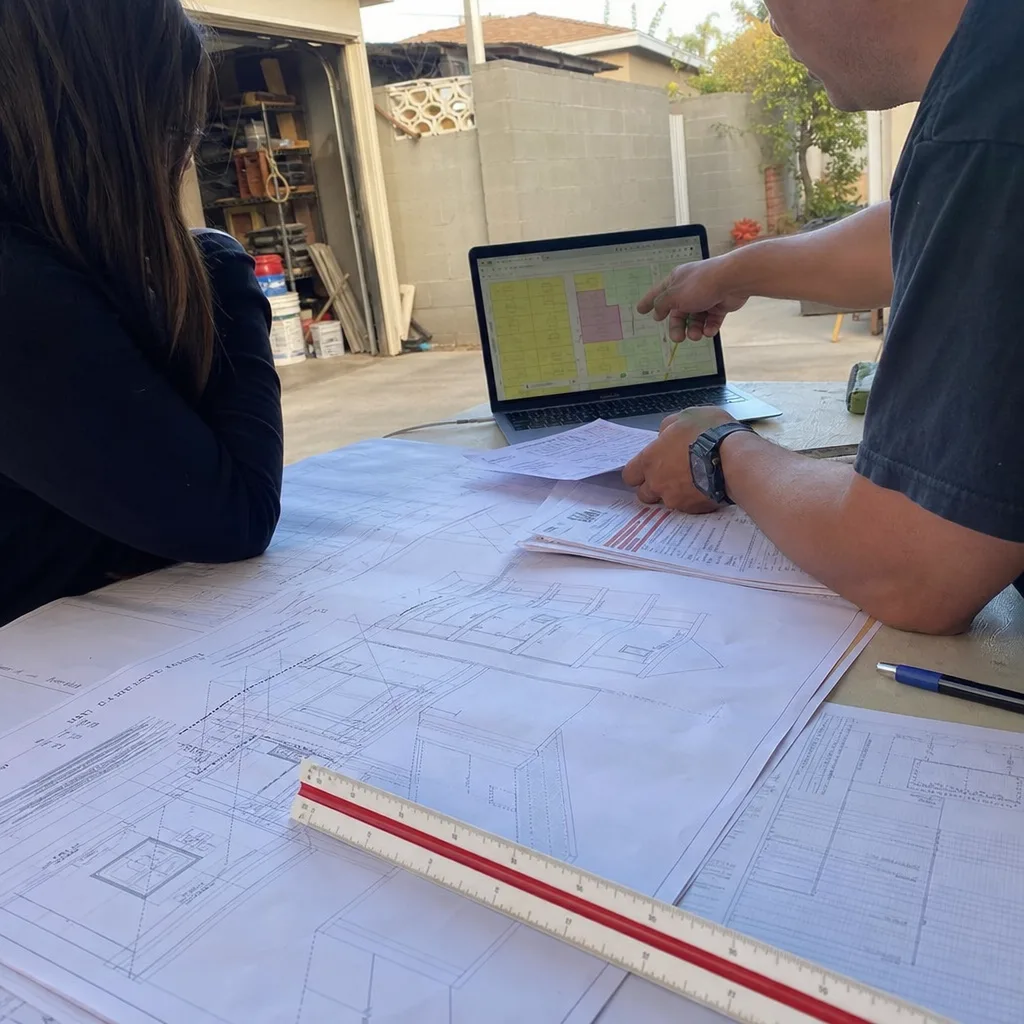
The owner-builder exemption in California Business and Professions Code §7044 lets a homeowner act as their own general contractor on residential construction. The exemption applies to single-family homes and accessory structures, including ADUs. But the statute carries three conditions that narrow its practical use in Los Angeles significantly.
First, the homeowner must personally reside in the property, or intend to reside there, for at least 12 months after completion. Second, the exemption covers only the construction work itself - it does not extend to specialized trades that require state licensing: electrical, plumbing, HVAC, and structural engineering. Third, and most consequential for Los Angeles homeowners, the exemption does not override local ordinance requirements for plan submittals.
We’ve reviewed hundreds of owner-builder applications at LADBS. The most common misconception is that the exemption eliminates the need for a licensed architect or engineer to prepare drawings. It does not. The exemption covers who can perform the construction and who can sign the permit application. It does not cover who must prepare the technical documents that LADBS reviews.
For Los Angeles homeowners, this distinction matters because the city’s ADU ordinance - updated in 2023 to align with state law - requires site plans, floor plans, elevations, and structural calculations for every ADU type except the narrowest Junior ADU category. The owner-builder can sign the application and hire unlicensed day laborers for framing and finish work. They cannot, however, produce their own structural calculations or energy compliance documentation.
The practical scope of the exemption in Los Angeles therefore breaks down as follows:
- Permitted: Signing as owner-builder; hiring unlicensed workers for non-technical trades; performing finish carpentry, painting, flooring installation, and fixture hanging personally
- Required licensed professional: Electrical, plumbing, and HVAC installation; structural engineering for any new foundation, roof structure, or seismic retrofit; Title 24 energy compliance certification
- Required professional documentation: Site plan, floor plan, elevations, and structural calculations - even for owner-builder permit applications
The exemption is real, but it is narrower than most homeowners assume when they first research ADU costs in Los Angeles.
What LADBS Requires at the Permit Counter
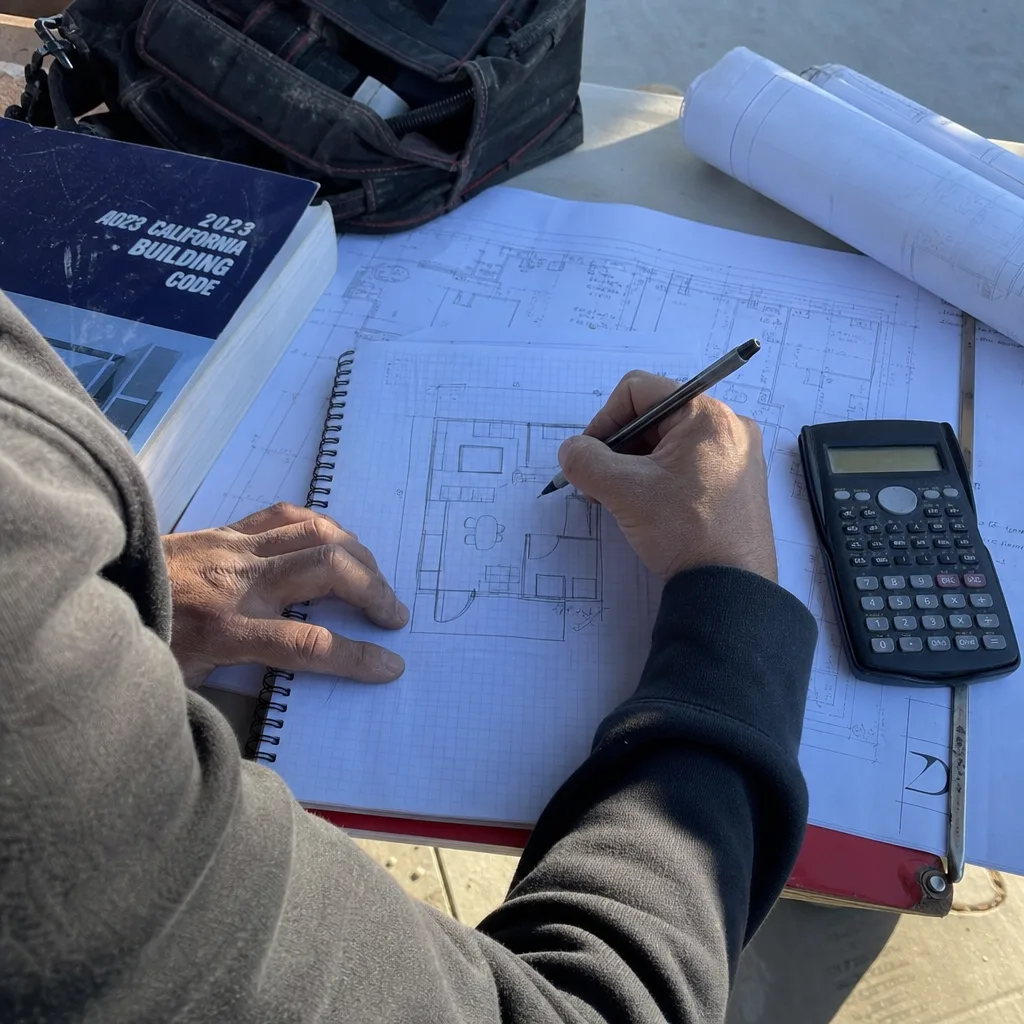
The Los Angeles Department of Building and Safety operates twelve plan check locations across the city, with ADU applications routed to the Residential Plan Check division. Owner-builder and licensed-professional applications enter the same queue but receive different scrutiny levels.
For an owner-builder ADU application, LADBS requires:
- Completed LADBS application form with the owner-builder box checked and a notarized affidavit attesting that the applicant owns and occupies the property
- Two complete sets of construction documents - site plan, floor plan, elevations, sections, and details - prepared by a licensed architect or under a licensed architect’s supervision, unless the project falls under the “minor architectural work” exemption (rare for ADUs)
- Structural calculations stamped by a California-licensed civil or structural engineer for any new construction, second-story additions, or garage conversions where the existing slab or walls are modified
- Title 24 energy compliance documentation - the Certificate of Compliance (CF1R) prepared by a certified energy analyst or HERS rater
- Green Building Code documentation for water conservation and indoor air quality measures
- Proof of sewer capacity from the Bureau of Sanitation for detached ADUs over certain sizes
The critical difference at the counter is document completeness. Licensed professionals who submit regularly understand LADBS’s current interpretation of the ADU ordinance - which shifted in January 2024 to require additional fire separation documentation for garage conversions. Owner-builders working from online templates or outdated city handouts often submit plans that lack these details.
In our experience, a professionally submitted ADU plan check in Los Angeles averages 4-6 weeks for a garage conversion and 6-10 weeks for a new detached unit. Owner-builder submissions with documentation gaps cycle through corrections, adding 3-6 weeks per round. We’ve seen owner-builder projects lose an entire construction season to plan-check delays.
LADBS also charges the same permit fees regardless of who submits: roughly $8-$12 per square foot for plan check and building permit combined, plus plumbing, electrical, and mechanical permit fees per fixture and circuit. The owner-builder saves no money on city fees.
The Three ADU Paths Most Attempted in Los Angeles
Los Angeles homeowners most often attempt the owner-builder route on three specific ADU types. Each carries different permit requirements, different professional-involvement minimums, and different risk profiles.
Garage Conversion Under 500 Square Feet
This is the most common owner-builder attempt in Los Angeles neighborhoods like Eagle Rock, Highland Park, and Mar Vista, where 1920s-1950s garages sit on existing concrete slabs with minimal structural modification needed. The appeal is obvious: the foundation exists, the roof structure often needs only reinforcement rather than replacement, and the utility connections are shorter runs.
However, LADBS treats garage conversions as change-of-occupancy projects, triggering stricter requirements than a simple remodel. The existing slab must meet current code for the new occupancy - typically 3.5 inches minimum with proper reinforcement, which many older Los Angeles garages lack. The fire separation between the ADU and any remaining garage space requires a one-hour rated assembly, documented with UL-listed materials. And the energy code treats converted space differently than new construction, requiring specific insulation and mechanical system sizing.
Owner-builders often budget $45,000-$75,000 for a garage conversion in Los Angeles, assuming their own labor and unlicensed workers for non-technical trades - though many wish they had consulted how to hire an ADU contractor in Los Angeles first. The professional design-build path for a comparable scope typically runs $95,000-$140,000 all-in, drawings through final inspection. The gap narrows when the owner-builder must hire a licensed structural engineer for slab assessment ($2,500-$4,500), a certified energy analyst for Title 24 ($800-$1,500), and licensed electricians and plumbers for rough-in and final connections.
Junior ADU (JADU)
The Junior ADU - a conversion within the existing single-family footprint, with a separate entrance but shared systems - is the narrowest category where owner-builder status is most defensible. Los Angeles allows JADUs up to 500 square feet, and state law prohibits cities from requiring parking replacement or new utility connections.
The JADU’s smaller scale reduces structural and mechanical complexity. Many JADUs in Los Angeles are converted bedrooms or enclosed porches with minimal structural modification. The owner-builder can reasonably perform finish work and coordinate licensed trades for the required kitchenette and bathroom.
But JADUs still require the same documentation at LADBS: floor plan, egress analysis, and fire separation details. And the shared-systems requirement - the JADU must connect to the primary dwelling’s electrical panel and water heater - often triggers electrical service upgrades that require a licensed electrician and utility coordination with LADWP. We’ve seen JADU projects stall for months while LADWP schedules a panel upgrade, a delay that hits owner-builders harder because they lack the contractor relationships to expedite utility appointments.
Attached Addition ADU
The attached addition - new square footage built onto the existing single-family home - is the least suitable for owner-builder status, yet it is frequently attempted in Los Angeles’s denser neighborhoods where lot coverage limits prevent detached structures. The structural integration with the existing building, the seismic requirements for Los Angeles’s Zone 4 earthquake designation, and the complexity of tying into existing systems make this path professional-dependent.
Owner-builders attempting attached additions in Los Angeles face the highest stop-work-order rate. LADBS inspectors flag structural connection details, foundation depth for the addition, and energy code compliance for the enlarged envelope. The rework rate on owner-builder attached additions exceeds 40% in our observation, compared to under 8% for professionally managed projects.
The Liability Transfer: What Changes When You Sign as Owner-Builder
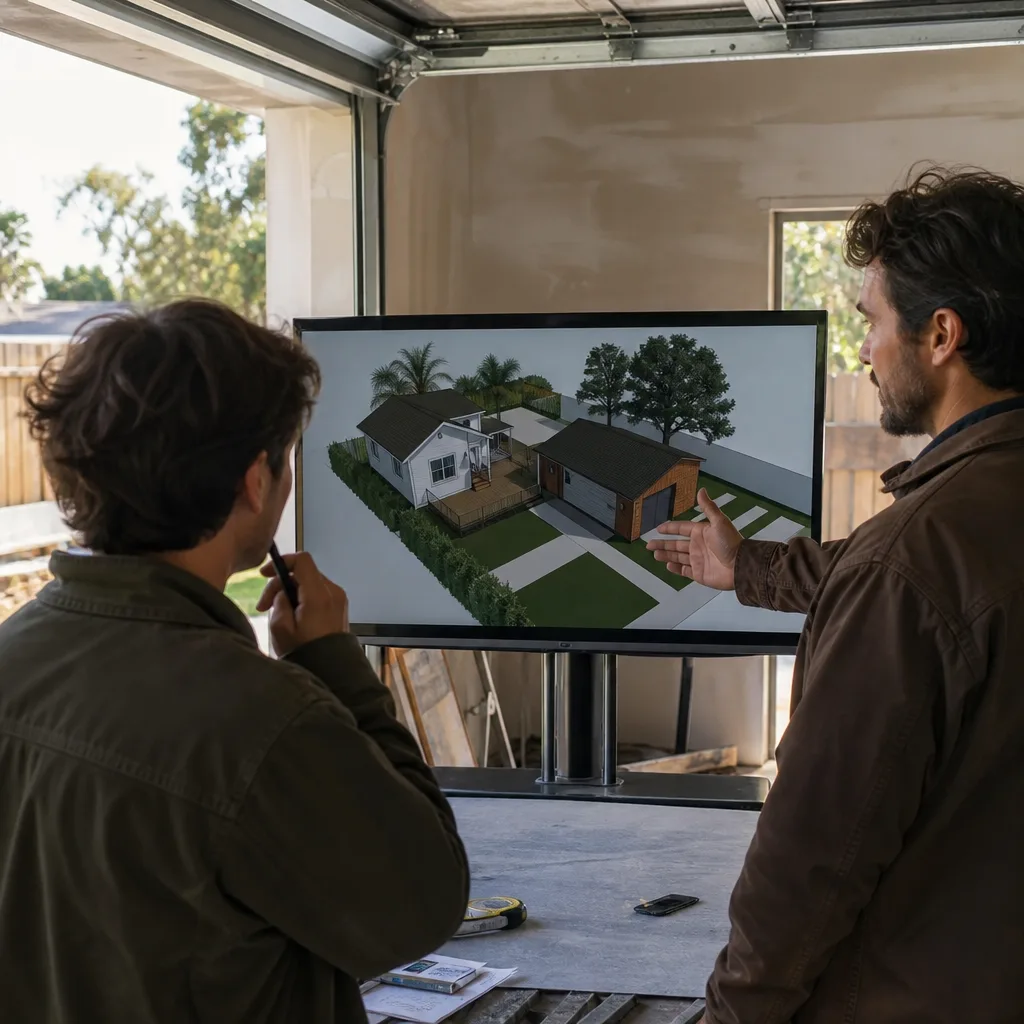
The moment a homeowner checks the owner-builder box on the LADBS application, three liability shifts occur that most do not fully understand.
Personal liability for code compliance. A licensed contractor carries statutory liability for work that fails inspection, with recourse through the Contractors State License Board and the contractor’s bond. An owner-builder assumes this liability personally. If LADBS issues a correction notice or stop-work order, the owner-builder is responsible for remediation costs, including demolition of non-compliant work. There is no bond to claim against and no CSLB complaint process for self-performed work.
Insurance implications. Standard homeowner’s insurance policies in Los Angeles typically exclude construction-related liability and worker injury claims. Owner-builders hiring unlicensed workers - legal under the exemption for non-technical trades - face uninsured exposure if a worker is injured on site. Workers’ compensation insurance is not required for independent contractors, but the classification is fact-specific, and misclassification exposes the homeowner to personal injury liability. We’ve consulted with homeowners whose umbrella policies were voided after claims related to unlicensed construction labor.
Resale and title complications. California law requires disclosure of unpermitted work and owner-builder status on transfer. More significantly, many title insurers in Los Angeles now flag owner-builder ADUs for additional review, particularly if permits were pulled without licensed contractor involvement. Lenders may require additional inspections or withhold construction-loan draws. For homeowners who built an ADU as a rental income asset, this friction at resale can reduce buyer pool and extend time on market, making seasonal ADU care and proper documentation essential long-term.
The liability transfer is not theoretical. In 2022, a Los Angeles homeowner in Silver Lake signed as owner-builder for a garage conversion, hired unlicensed workers for framing, and faced a $34,000 remediation order when LADBS found inadequate fire separation. The owner-builder had no recourse - the workers were judgment-proof, and the homeowner’s insurance denied the claim as construction-related.
Cost Comparison: Real Numbers for Los Angeles
Pricing the owner-builder path requires accounting for hidden costs that do not appear in initial budgets. Below is a transparent comparison for a typical 400-square-foot garage conversion ADU in Los Angeles, based on 2024 market rates we’ve tracked across our project portfolio.
| Cost Category | Owner-Builder Path | Design-Build Path (Ellery ADU Studio Los Angeles) |
|---|---|---|
| Architectural drawings and permit set | $4,500-$7,500 (licensed architect required) | Included in contract |
| Structural engineering stamp | $2,500-$4,500 | Included in contract |
| Title 24 energy compliance (CF1R) | $800-$1,500 | Included in contract |
| LADBS permit fees | $3,200-$4,800 | $3,200-$4,800 (pass-through, no markup) |
| Site prep and demolition | $3,000-$5,000 (unlicensed labor) | Included in contract |
| Foundation/slab work | $4,000-$7,000 | Included in contract |
| Framing and structural | $8,000-$12,000 (unlicensed labor, self-performed) | Included in contract |
| Electrical rough and final | $4,500-$7,000 (licensed electrician required) | Included in contract |
| Plumbing rough and final | $3,500-$5,500 (licensed plumber required) | Included in contract |
| HVAC / mini-split system | $2,500-$4,000 | Included in contract |
| Insulation and drywall | $3,000-$5,000 | Included in contract |
| Finish carpentry, flooring, paint | $4,000-$7,000 (self-performed or unlicensed) | Included in contract |
| Fixtures and appliances | $2,500-$4,500 | $2,500-$4,500 (owner selection, no markup) |
| Project management / coordination | $0 (self-managed, 200+ hours) | Included in contract |
| Rework / correction costs (statistical) | $8,000-$15,000 (35% incidence × $23,000 avg) | $0-$3,000 (under Haven Standard Clause 5) |
| Total realistic range | $68,000-$105,000 | $95,000-$140,000 |
The owner-builder savings of $27,000-$35,000 - roughly 25% at the median - erodes quickly when rework, extended timeline carrying costs, and the value of 200+ hours of self-management are priced. At a conservative $50/hour for professional time, the owner-builder’s labor contribution is $10,000 of implicit cost. The net savings narrow to 15-18%, before insurance risk and resale friction.
Under Ellery ADU Studio Los Angeles‘s Haven Standard, the written price before work starts - Clause 1 - eliminates the rework variable. The 365-Day Done Right Promise covers correction costs that owner-builders absorb personally.
The Two Tasks That Are Always Professional-Only
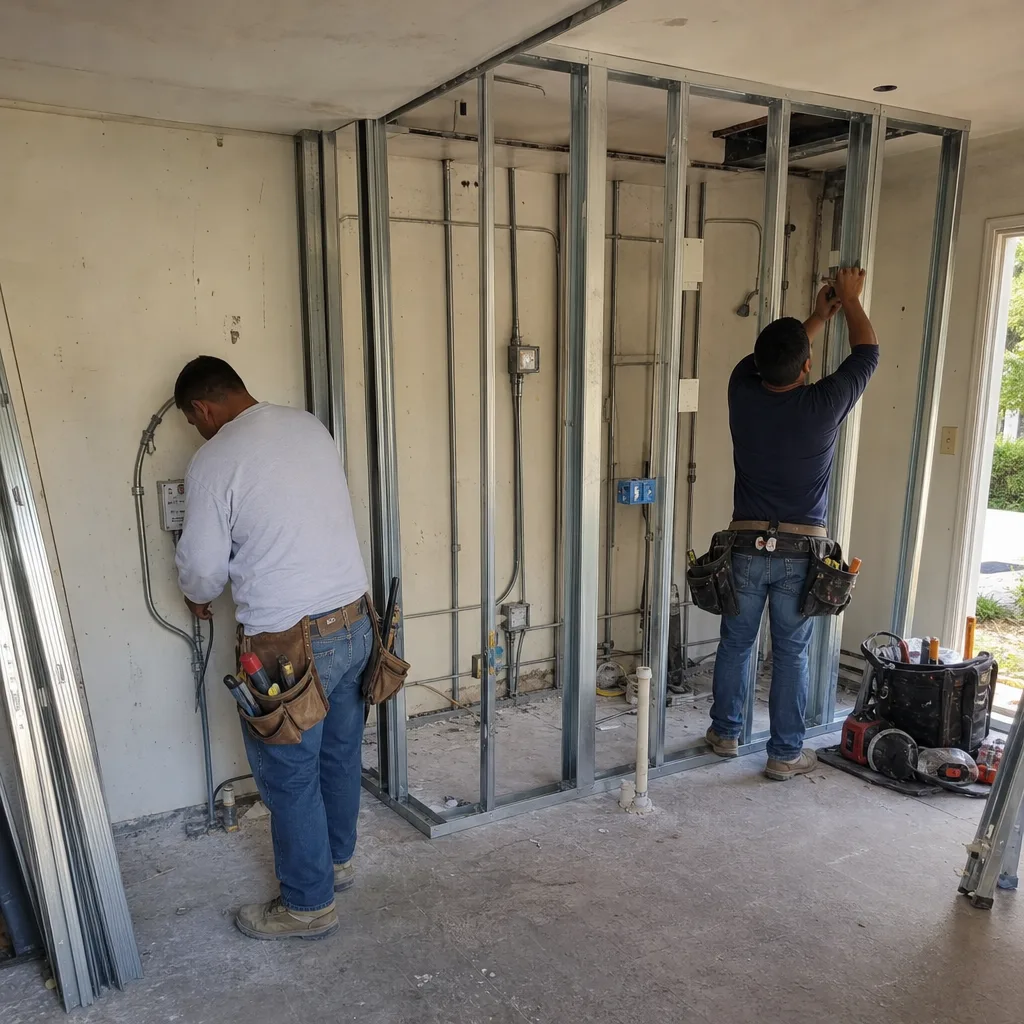
Regardless of owner-builder status, two ADU tasks in Los Angeles require licensed professionals by law. These are not optional, and attempting to bypass them triggers permit rejection or stop-work orders.
Structural Engineering Stamps
California Business and Professions Code §6737 requires a licensed civil or structural engineer to prepare and stamp structural calculations for any construction involving new foundations, structural modifications to existing buildings, or seismic bracing. Los Angeles’s Zone 4 seismic designation - the highest risk category - means virtually every ADU triggers this requirement.
For garage conversions, the engineer must assess the existing slab’s capacity for residential occupancy, the lateral force resistance of existing walls, and the connection details for any new roof structure. For detached ADUs, full structural design is required for foundation, floor, walls, and roof. The engineer’s stamp is not a formality; LADBS plan checkers review calculations line-by-line, and we’ve seen engineer-stamped plans returned for insufficient detail on shear wall nailing patterns or hold-down specifications.
Owner-builders sometimes purchase “pre-engineered” plans online. These are rejected at LADBS if they are not site-specific - the soil conditions in Los Angeles’s hillside neighborhoods differ materially from flat areas, and generic calculations do not account for site-specific seismic or geotechnical factors.
Title 24 Energy Compliance Certification
California’s Title 24, Part 6 energy code requires every new construction project and most alterations to demonstrate compliance through the California Energy Commission’s approved software. The output - the Certificate of Compliance (CF1R) - must be signed by a Certified Energy Analyst (CEA) or HERS Rater.
The certification process models the building’s energy performance, accounting for insulation values, window specifications, mechanical system efficiency, and - critically for Los Angeles - solar readiness requirements. As of 2023, new detached ADUs in California must include solar photovoltaic systems or demonstrate solar-ready construction, with specific conduit and roof loading provisions.
Owner-builders cannot self-certify Title 24 compliance. The software requires licensed access, and the certification carries professional liability. More importantly, LADBS will not issue a final occupancy permit without a signed CF1R, and the HERS verification process - including field inspections of installed insulation and mechanical systems - occurs during construction, not after.
We’ve coordinated Title 24 compliance for ADU Design & Permitting in Los Angeles across prefab systems including Dvele and Mighty Buildings, where factory-built efficiency complicates but does not eliminate site-specific energy modeling. The certification is integrated into our single-contract process; owner-builders must hire and coordinate this separately.
Common Mistakes to Avoid
- Assuming the owner-builder exemption eliminates architectural drawings. LADBS requires permit-ready construction documents for every ADU category. The exemption covers who signs the application, not what documents must be submitted. Homeowners who skip professional drawings face repeated plan-check corrections.
- Hiring unlicensed workers for electrical, plumbing, or HVAC. These trades require state licensing regardless of owner-builder status. LADBS inspectors verify license numbers at rough-in inspections. Unlicensed work is red-tagged, requiring removal and reinstallation by a licensed contractor.
- Neglecting LADWP coordination for service upgrades. Many Los Angeles ADUs require electrical panel upgrades that need LADWP approval, with lead times of 8-12 weeks. Owner-builders often schedule construction assuming utility work moves faster, then face idle crews and extended financing costs.
- Using generic online plans without Los Angeles-specific amendments. ADU plans sold for statewide use rarely include Los Angeles’s specific fire separation, hillside, or Baseline Mansionization Ordinance requirements. The $500 “permit-ready” plan package becomes a $4,000 revision when LADBS rejects it.
- Failing to document existing conditions before construction. In Los Angeles’s older neighborhoods, undocumented existing conditions - asbestos-containing materials, unpermitted prior work, non-compliant setbacks - surface during construction and trigger stop-work orders. Professional projects include pre-construction documentation; owner-builders often lack this evidence.
- Underestimating soft costs and carrying time. Owner-builder timelines in Los Angeles average 14-18 months from permit application to certificate of occupancy, versus 8-12 months for professionally managed projects. Extended financing, property tax, and opportunity costs rarely appear in owner-builder budgets.
- Overlooking resale disclosure obligations. California’s Transfer Disclosure Statement requires owner-builder status and unpermitted work disclosure. Los Angeles title insurers increasingly require additional inspections for owner-builder ADUs, adding $1,500-$3,000 to seller closing costs.
When to Call a Professional
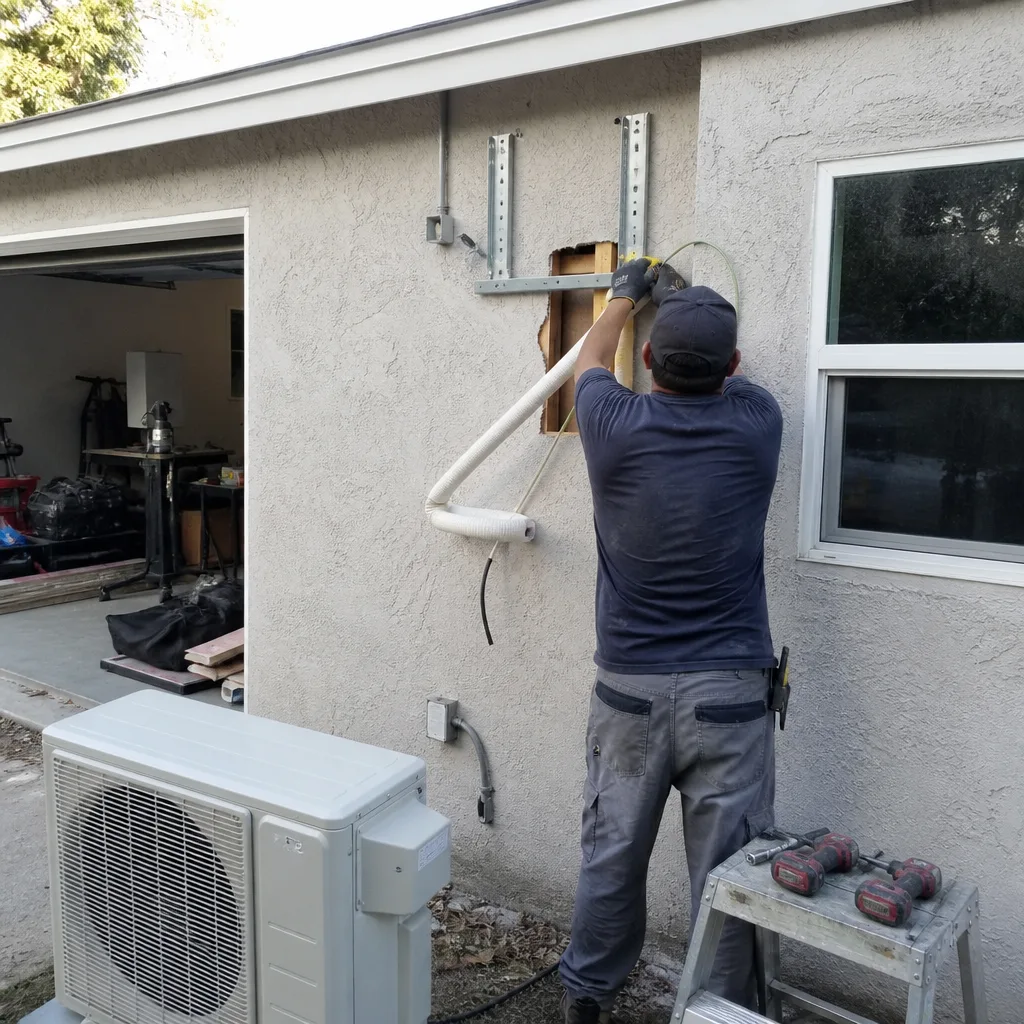
Call a professional when your ADU involves any structural modification, any new foundation, any hillside or sloped site, any property in a Los Angeles Historic Preservation Overlay Zone, or any project where your financing requires licensed contractor documentation - or explore more guides & resources to help decide. Call when you cannot personally commit 200+ hours to project management, or when your household depends on the rental income timeline.
Ellery ADU Studio Los Angeles offers free estimates in Los Angeles - call (424) 551-7706. We also provide a Free Second Opinion on any written estimate already in hand, applying the same documentation standards we use for our own projects. Every estimate includes a written price before any work starts, per Haven Standard Clause 1, with no door-side upsells or scope creep under Clause 5.
For homeowners committed to the owner-builder path, we offer permit-set-only services through ADU Design & Permitting in Los Angeles - professional drawings and engineering that meet LADBS standards, delivered for owner-builder signature. This hybrid path captures professional documentation quality while preserving owner-builder labor savings for suitable projects.
Frequently Asked Questions
An owner-builder garage conversion ADU in Los Angeles typically costs $68,000-$105,000 all-in, while a single-contract design-build path runs $95,000-$140,000. The 25% apparent savings narrows to 15-18% after pricing 200+ hours of self-management and statistical rework costs. Call (424) 551-7706 for a written estimate with exact scope - our Free Second Opinion applies to estimates already in hand.
Yes, under California’s owner-builder exemption, but you remain personally liable for all code compliance and lose CSLB protections for unlicensed workers you hire. LADBS still requires licensed-professional documentation - architectural drawings, structural engineering stamps, and Title 24 certification - regardless of who signs the permit application.
Under Ellery ADU Studio Los Angeles’s Haven Standard, the price is locked at contract signing - Clause 1 guarantees a written price before any work starts, and Clause 5 prohibits scope creep without written change order. Owner-builder projects have no such protection; material cost overruns and rework expenses fall entirely to the homeowner.
Professionally submitted ADU plans in Los Angeles average 4-6 weeks for garage conversions and 6-10 weeks for new detached units. Owner-builder submissions with documentation gaps cycle through corrections, adding 3-6 weeks per round. We’ve seen owner-builder projects lose an entire construction season to plan-check delays.
Yes, if the existing slab, walls, or roof structure are modified for residential occupancy - which is nearly always. California law requires a licensed engineer’s stamp for structural calculations, and LADBS enforces this strictly for Zone 4 seismic requirements. Pre-engineered online plans are rejected if not site-specific to your Los Angeles property’s soil and seismic conditions.
California requires disclosure of owner-builder status and any unpermitted work on the Transfer Disclosure Statement. Los Angeles title insurers increasingly flag owner-builder ADUs for additional review, potentially requiring post-construction inspections. Lender title insurance for buyers may be complicated if permits lack licensed contractor sign-off. These friction points can extend time on market and reduce buyer pool.
The Bottom Line
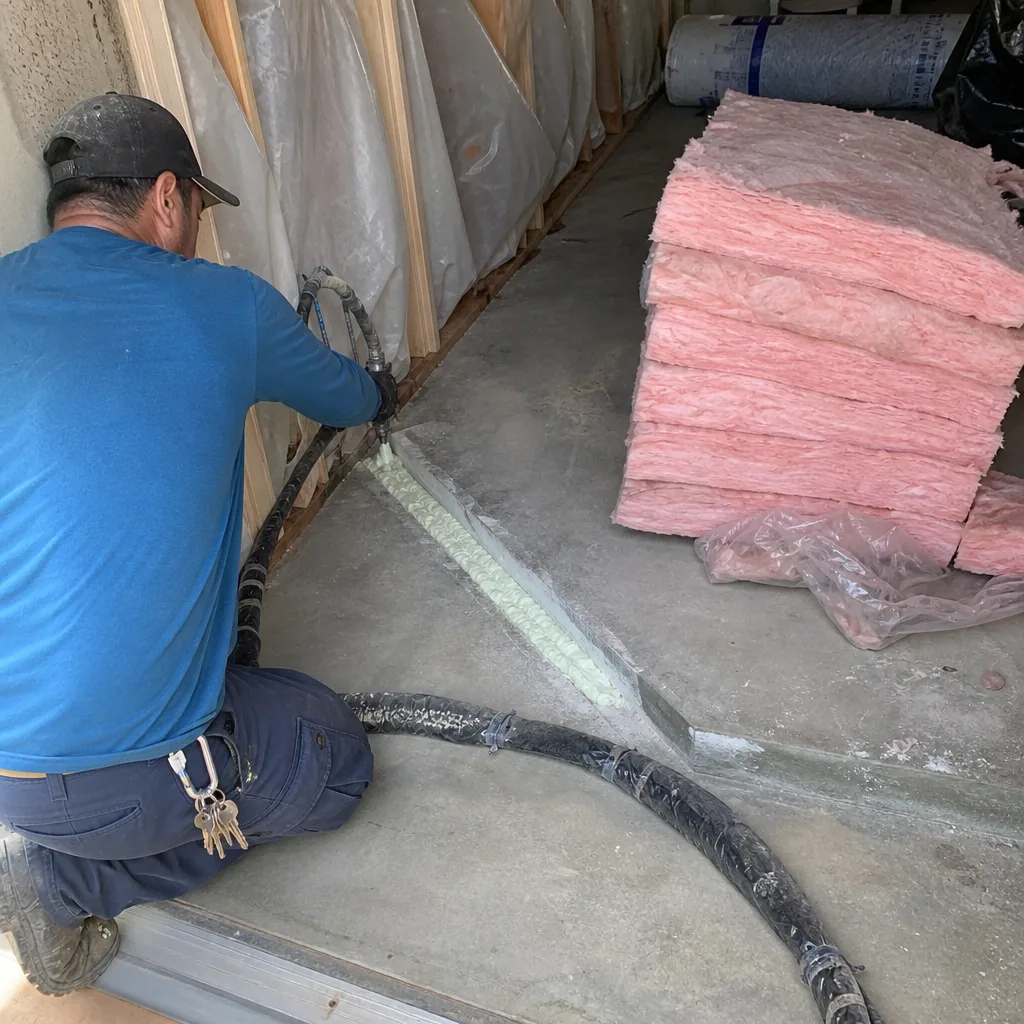
The DIY-versus-professional question for Los Angeles ADUs is not about skill level - it is about licensure, liability, and what LADBS will legally accept. California’s owner-builder exemption is real but narrower than most homeowners assume: structural engineering and Title 24 certification remain professional-only, and the liability transfer exposes personal assets to code-compliance risk. For garage conversions under 500 square feet and Junior ADUs, the owner-builder path offers 15-18% net savings for homeowners with 200+ hours to manage, tolerance for timeline uncertainty, and no near-term resale plans. For attached additions, hillside sites, or any project where financing, insurance, or asset liquidity matters, the single-contract design-build path eliminates the designer-builder blame gap and provides documented, warrantied completion. The Haven Standard - written price, photo record, 365-Day Done Right Promise - exists because we’ve seen what goes wrong when documentation gaps meet Los Angeles’s complex permit environment.
Written by Nadia Ellery, Owner at Ellery ADU Studio Los Angeles, serving Los Angeles since 2015.