
Last updated September 22, 2026
ADU Design & Permitting Maintenance Checklist for Los Angeles Homeowners
Most Los Angeles homeowners treat their ADU permit set like a diploma - framed, filed, forgotten. Here’s the problem: that stamped package from LADBS is a legally binding set of conditions that governs your property in perpetuity. The smoke detector placement documented in your approved drawings? That’s a legal requirement forever. Swap brands during a battery change, relocate a unit during a kitchen refresh, and you’ve technically altered a permitted condition. In a city where ADU resales are increasingly common in neighborhoods from Eagle Rock to Mar Vista, buyers’ inspectors now flag permit-compliance gaps that can delay escrow or kill deals entirely. This guide maps the specific maintenance obligations hidden in a standard LA ADU permit set, the documentation intervals that protect your investment, and the local environmental factors that add checklist items no ADU Permits, Codes & Inspections in CA: What You Need to Know and no generic California guide covers.
Quick Answer
An ADU permit set in Los Angeles requires ongoing homeowner maintenance of life-safety systems (smoke/CO detectors, egress windows, electrical panel labeling), periodic documentation of structural and utility conditions, and preservation of as-built drawings separate from your contractor’s copy. Missing these obligations can void your certificate of occupancy, trigger LADBS re-inspection, or derail a future sale.
Table of Contents
- Why Your Permit Set Is a Living Document, Not a Filing Cabinet Artifact
- Annual Maintenance: Life-Safety Systems and Detector Compliance
- Biennial and Five-Year Inspections: Structural, Utility, and Environmental
- Los Angeles Environmental Factors: Seismic, Fire Zone, and Hillside Additions
- As-Built Drawings: What They Are and Why You Need Your Own Signed Set
- Documenting Maintenance for Resale Value and Buyer’s Inspection
- How Design-Build Warranty Clauses Map to Your Maintenance Schedule
- Common Mistakes to Avoid
- When to Call a Professional
- Frequently Asked Questions
- The Bottom Line
Why Your Permit Set Is a Living Document, Not a Filing Cabinet Artifact
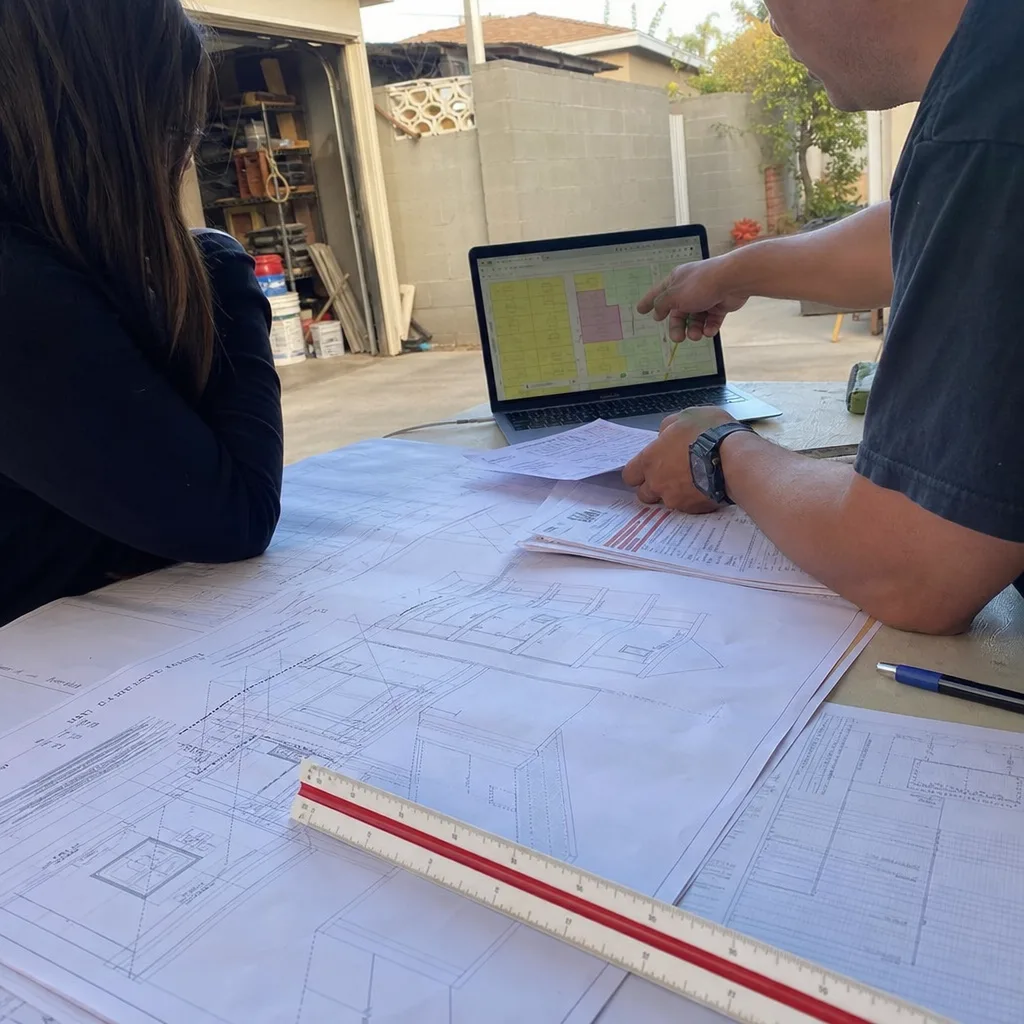
The standard LADBS-approved ADU permit package contains roughly 15-25 sheets depending on project complexity: site plan, floor plans, elevations, structural calculations, MEP (mechanical, electrical, plumbing) plans, and energy compliance documentation. Each sheet carries conditions that survive final inspection. Most homeowners in Los Angeles don’t realize this. They file the folder, frame the certificate of occupancy, and move on.
Here’s what actually happens. Your approved electrical plan specifies the exact location of your electrical panel, the circuit labeling scheme, and the arc-fault circuit interrupter (AFCI) and ground-fault circuit interrupter (GFCI) placement. Move the panel six feet during a garage reorganization, and you’ve deviated from the permitted condition. LADBS doesn’t patrol for this, but a buyer’s inspector might. So might your insurance carrier after a claim.
The same applies to egress windows - the operable windows sized and located specifically for emergency escape. Your permit set shows exact dimensions, sill heights, and clear opening areas. Replace a window with a smaller unit, add security bars without quick-release hardware, or install a fixed pane where an operable one was specified, and you’ve compromised a life-safety condition.
At Ellery ADU Studio Los Angeles, we’ve reviewed permit sets for hundreds of ADU owners who bought properties with existing units and discovered compliance gaps the seller never disclosed. The permit set is a maintenance schedule disguised as a construction document. Treating it that way from day one prevents surprises.
Key permit-set items with perpetual compliance obligations:
- Smoke and carbon monoxide detector placement, brand, and interconnection method
- Egress window dimensions, sill heights, and operation type
- Electrical panel location, labeling, and AFCI/GFCI coverage
- Water heater seismic strapping and expansion tank placement
- HVAC equipment specifications and combustion air requirements
- Fire-rated assemblies (walls, doors, dampers) where required by LA Fire Department conditions
We deliver every client a bound permit set with flagged maintenance items highlighted in yellow - not because we’re generous, but because we’ve seen what happens when owners lose track. Under Haven Standard Clause 3 (Documented Handoff), you receive the permit set, a photo record of every construction phase, and a written maintenance schedule before we request final inspection.
Annual Maintenance: Life-Safety Systems and Detector Compliance
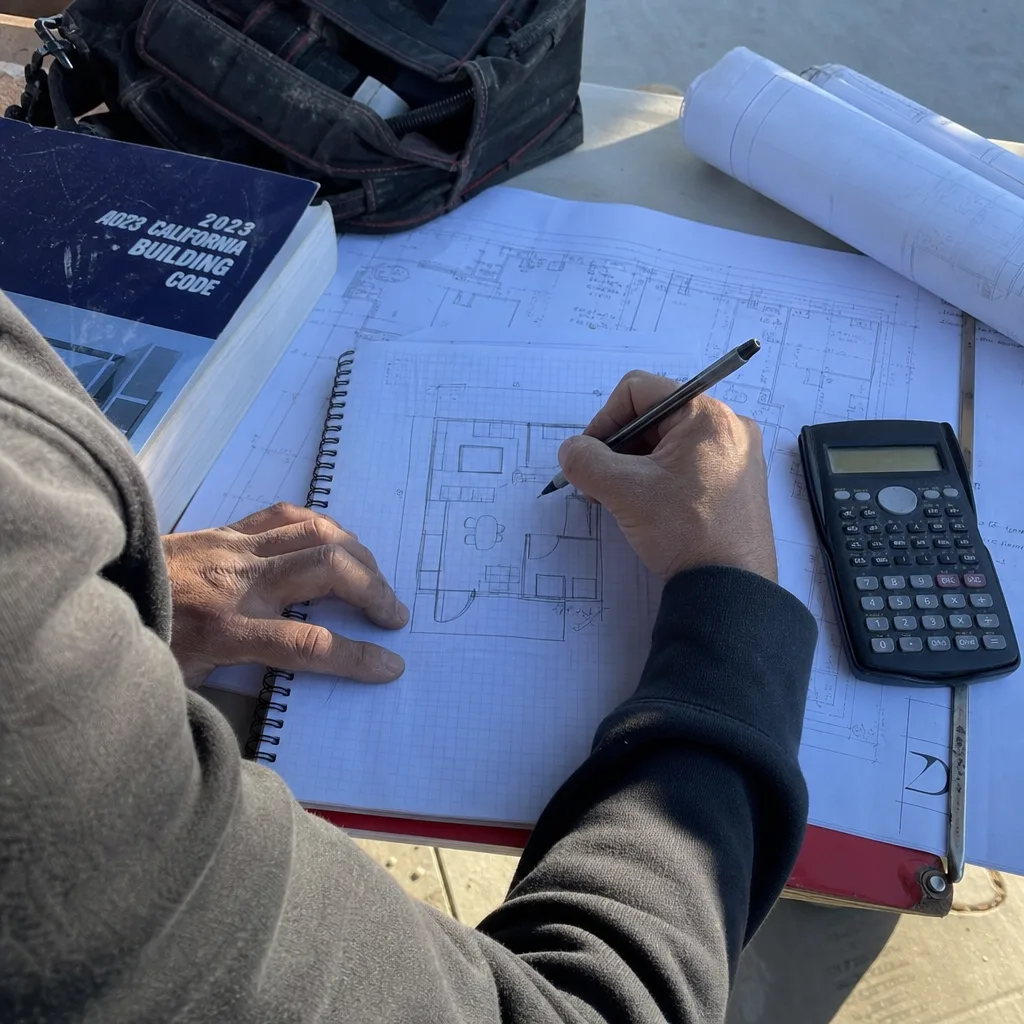
Los Angeles Municipal Code and the California Residential Code require specific life-safety maintenance that most homeowners perform haphazardly. The annual checklist is short but legally consequential.
Smoke detectors in ADUs must be maintained according to the manufacturer’s specifications and the approved permit set. If your permit specifies interconnected hardwired units with battery backup - standard for most ADU Design & Permitting in Los Angeles projects - replacing one unit with a battery-only model breaks the interconnection and violates the permitted condition. We’ve seen this in Silver Lake ADUs where owners swapped brands for aesthetic reasons during a paint refresh.
- Test all smoke and CO detectors monthly using the test button. Document the date in a maintenance log.
- Replace batteries annually in battery-backup units, or when the low-battery chirp activates - whichever comes first.
- Replace detectors entirely every 10 years from manufacture date (stamped on the back), or per manufacturer’s shorter interval.
- Verify interconnection by testing one unit and confirming all units sound. A failed interconnection is a permit violation.
- Match replacement brands and models to the approved permit set where specified, or document the substitution with equivalent UL-listed performance.
Carbon monoxide detectors follow the same logic. In Los Angeles, ADUs with fuel-burning appliances or attached garages require CO detection. The permit set specifies location - typically within 15 feet of sleeping areas. Relocating a detector to accommodate new furniture placement may seem trivial. It isn’t.
Electrical panel labeling requires annual verification. The approved panel schedule in your permit set shows which circuits serve which rooms. After years of breaker replacements, additions, or homeowner modifications, labels fade or become inaccurate. An accurate panel schedule is required for emergency responder safety and for any future electrical permit.
GFCI and AFCI protection must be tested monthly per manufacturer instructions. These devices degrade. A failed GFCI in a kitchen or bathroom creates both a shock hazard and a permit-compliance gap.
Biennial and Five-Year Inspections: Structural, Utility, and Environmental
Some maintenance intervals don’t appear in code but emerge from practical ownership experience in Los Angeles conditions. We structure these around biennial (every two years) and five-year cycles.
Biennial inspection items:
- Water heater seismic strapping - verify two straps, one in upper third and one in lower third of tank, with approved fasteners into wall framing. LA’s seismic activity loosens straps over time.
- Expansion tank pressure - check pre-charge pressure matches supply pressure. Failed expansion tanks cause T&P valve discharge and water damage.
- HVAC condensate drainage - clear lines, verify trap function, check pan float switches. LA’s dry summers bake condensate residue into blockages.
- Exterior door and window weatherstripping - degraded seals increase energy use and may affect compliance with Title 24 energy documentation in your permit set.
- Foundation and slab perimeter - inspect for settlement cracks, water intrusion, or pest damage. ADUs on hillside lots in Los Angeles neighborhoods like Mount Washington or Laurel Canyon see more movement than flatland units.
Five-year inspection items:
- Roof condition and drainage - check membrane integrity, flashing, and gutter function. LA’s intense sun exposure degrades roofing materials faster than coastal California climates.
- Electrical service and grounding - verify ground rod connections, panel bus condition, and proper torque on main lugs. Thermal expansion and contraction loosen connections.
- Plumbing supply and drain lines - inspect for corrosion, particularly in areas with LA’s harder water chemistry. Check cleanout accessibility.
- Fire-rated assembly condition - where your permit set specifies fire-rated drywall, doors, or dampers, verify no penetrations, modifications, or damage.
- Structural connector inspection - hurricane ties, hold-downs, and anchor bolts, particularly in ADUs built under older code cycles with less stringent requirements.
Document each inspection with dated photos and notes. This documentation becomes evidence of diligent maintenance if compliance questions arise.
Los Angeles Environmental Factors: Seismic, Fire Zone, and Hillside Additions
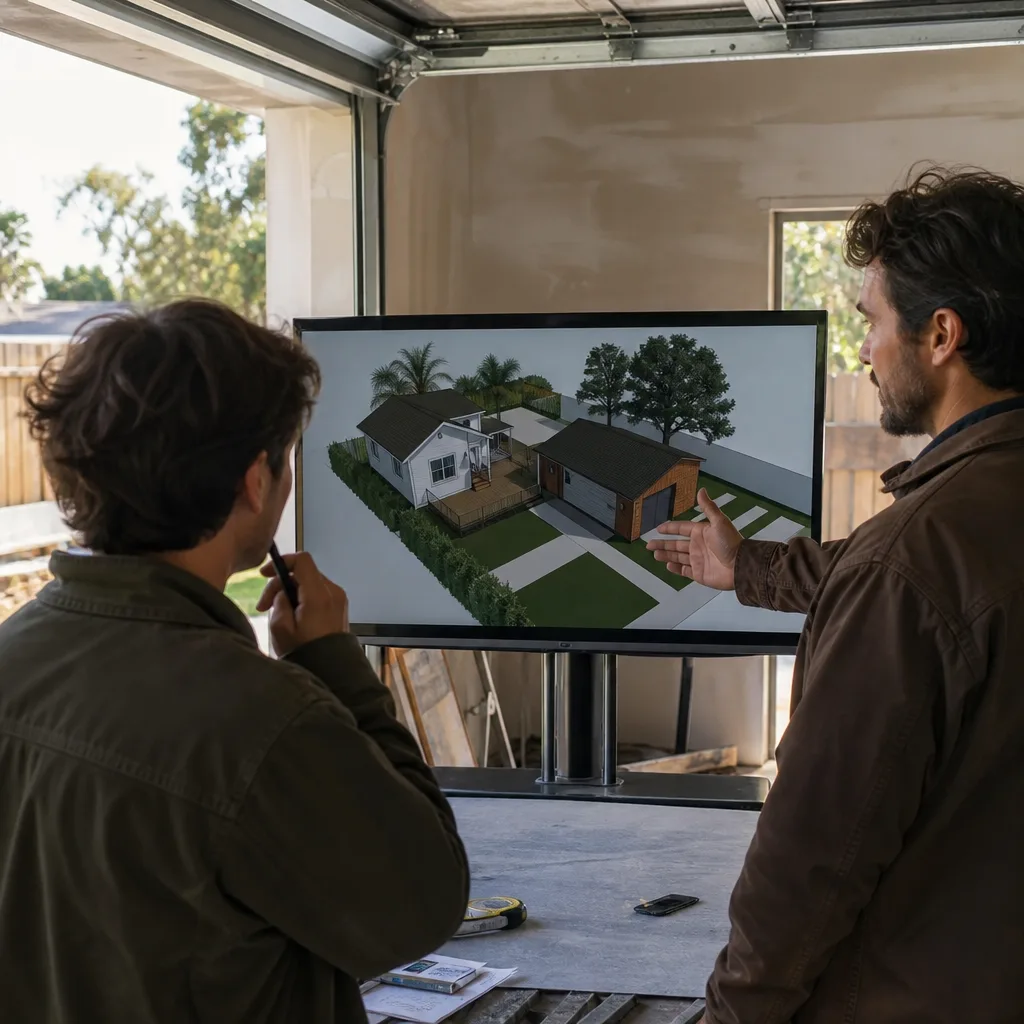
ADU Warning Signs: A Los Angeles Homeowner’s Reference Guide and generic California ADU guides miss the local conditions that add maintenance obligations specific to Los Angeles. Our geography and climate create checklist items that don’t exist in Sacramento or San Diego.
Seismic considerations: Los Angeles sits on multiple active fault systems. ADUs permitted after 2015 incorporate stricter seismic detailing - continuous load paths, hold-downs, and engineered shear walls. Older ADUs, particularly garage conversions on pre-1980 foundations, may lack these details. The maintenance obligation isn’t to retrofit (though that’s worth considering), but to monitor. Annual inspection of foundation cracks, door and window operation (sticking indicates movement), and visible structural connectors can reveal developing problems before they become emergencies. In our experience across Los Angeles neighborhoods from Venice to Highland Park, ADUs on fill soils or near canyon edges show movement patterns that flatland units don’t.
Fire zone requirements: LAFD designates high fire hazard severity zones (HFHSZ) in the hills and wildland-urban interface areas. ADUs in these zones - think Topanga, parts of the Santa Monica Mountains, or the foothill communities - carry additional permit conditions: ember-resistant venting, specific roofing materials, defensible space maintenance, and sometimes sprinkler requirements. The permit set documents these. Annual maintenance must include vent inspection (no debris, screens intact), roof debris clearing, and vegetation management within the specified defensible space perimeter. Missing these can void insurance coverage or trigger LAFD correction notices.
Hillside geotechnical conditions: ADUs on hillside lots require engineered foundations, drainage systems, and sometimes retaining walls. The permit set includes drainage plans showing surface flow directions, subsurface drain locations, and outlet points. These systems clog. Biennial inspection of drain inlets, outlet clearances, and retaining wall drainage weep holes prevents hydrostatic pressure buildup that can destabilize slopes. We’ve documented failures in Los Feliz and Echo Park where ignored drainage caused foundation movement that cracked ADU slabs.
Solar exposure and heat: Los Angeles sun is intense and sustained. Roof-mounted HVAC equipment, solar thermal systems, and even conduit and piping on south-facing walls degrade faster than shaded installations. Five-year inspection should include UV-degraded materials specifically.
As-Built Drawings: What They Are and Why You Need Your Own Signed Set
Permit drawings show what was designed. As-built drawings show what was actually constructed. The difference matters for maintenance, future renovation, and resale.
During construction, field conditions force changes: a sewer line in a different location than expected, a beam depth that required adjusted ceiling height, an HVAC duct routed around unexpected framing. The contractor marks these changes on a set of drawings. Those marked-up drawings, signed by the responsible designer or engineer, become the as-built record.
Most Los Angeles ADU owners never receive as-built drawings. The contractor keeps the marked-up set for warranty reference, and the homeowner gets the original permit set - which no longer matches reality. This creates problems:
- Future renovation requires cutting into walls without knowing what’s inside
- Maintenance contractors can’t locate buried utilities or hidden junction boxes
- Buyer’s inspectors flag discrepancies between permit drawings and visible conditions
- Insurance claims face disputes when actual construction doesn’t match documented construction
Under Haven Standard Clause 3 (Documented Handoff), Ellery ADU Studio Los Angeles delivers a signed as-built set to every client before final payment. We also provide the documented photo record - timestamped images of every wall before drywall, every trench before backfill, every ceiling before insulation. You own this documentation. Store it with your permit set, not with us.
If you bought an ADU without as-built drawings, consider commissioning an as-built survey. Cost typically runs $800-$2,400 for a standard ADU depending on complexity. It’s deductible as a capital improvement and pays for itself in avoided surprises.
Documenting Maintenance for Resale Value and Buyer’s Inspection
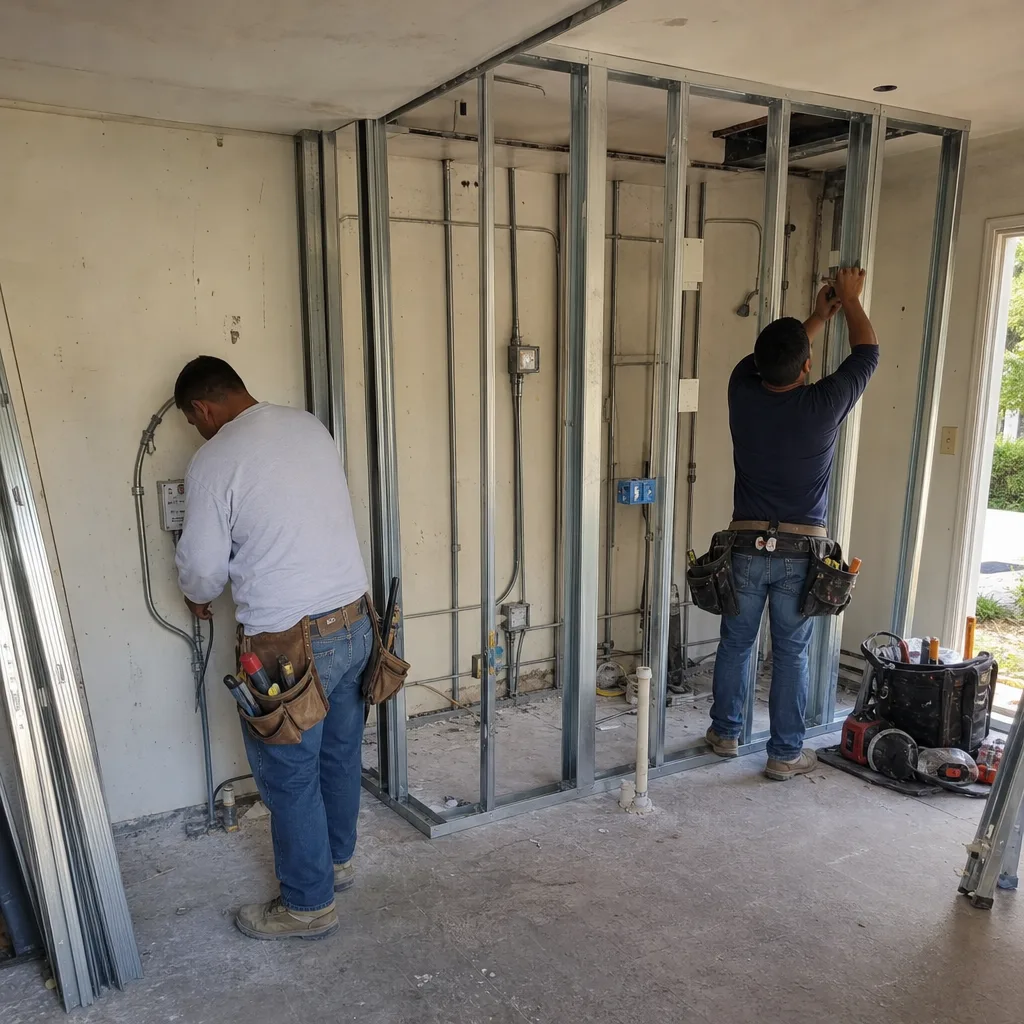
Los Angeles ADU sales are increasingly common as owners monetize investments or relocate. Buyers and their lenders scrutinize ADU compliance more closely than in past years. Documented maintenance history separates smooth transactions from escrow disasters.
What buyers’ inspectors check:
- Permit history - was the ADU permitted, or is it non-conforming?
- Certificate of occupancy - is it current and matches actual use?
- Life-safety systems - detectors, egress, electrical protection
- Structural condition - cracks, settlement, water damage
- Utility compliance - proper electrical and plumbing, no hazardous conditions
A maintenance log addresses these directly. Ours includes:
- Permit set and as-built drawings - the complete approved package plus signed as-builts
- Certificate of occupancy - original and any amendments
- Annual detector test log - dated test results, battery replacements, unit replacements
- Biennial inspection reports - photos and notes from structural, utility, and environmental checks
- Five-year comprehensive inspection - roof, electrical service, plumbing, fire-rated assemblies, structural connectors
- All contractor invoices and warranty documents - organized by trade and date
- Photo record of any modifications - even minor ones, with dates and descriptions
This documentation demonstrates due diligence. In a competitive Los Angeles sale, it can justify a higher price by reducing buyer uncertainty. We’ve seen buyers waive inspection contingencies when comprehensive documentation is available - rare, but it happens.
One specific Los Angeles consideration: rent control and tenant rights. If your ADU has been rented, maintenance documentation also supports habitability defense if disputes arise. Dated photos of functional detectors, intact egress, and operational utilities are evidence of compliance with California habitability standards.
How Design-Build Warranty Clauses Map to Your Maintenance Schedule
Most construction warranties are worthless because they’re disconnected from maintenance reality. The owner doesn’t maintain, the builder won’t honor coverage, and everyone litigates. A design-build contract with explicit maintenance expectations prevents this.
The Haven Standard, which governs every New Detached ADU in Los Angeles and other project types we deliver, includes warranty clauses that activate only with documented maintenance. This isn’t punitive - it’s clarity. Here’s how the mapping works:
365-Day Done Right Promise (Clause 6): Covers defects in workmanship and materials for one year from certificate of occupancy. Activation requires the owner to perform annual detector testing, maintain utilities in working order, and notify us promptly of any concerns. We’ve honored this for issues ranging from settling door frames to HVAC commissioning adjustments. We’ve also declined where owner neglect - blocked condensate lines, removed detectors, DIY electrical modifications - caused the problem.
Structural warranty (Clause 7): Extends to five years for major structural elements. Requires biennial inspection documentation and prompt reporting of settlement indicators. In Los Angeles, this specifically includes seismic strap verification and hillside drainage maintenance where applicable.
Manufacturer warranties: Water heaters, HVAC equipment, windows, and appliances carry their own warranties, typically 5-10 years. These require owner-performed maintenance - filter changes, anode rod inspection, condenser cleaning - documented in owner’s manuals. We compile these manuals and maintenance schedules into a single binder as part of our handoff.
The critical point: warranty coverage and maintenance obligation are two sides of the same contract. Understanding this from the start prevents the blame-shifting that derails most ADU projects. Our single-contract model means there’s no designer to blame the builder, or builder to blame the designer. Haven Standard Clause 5 (No Surprises) locks scope at signing; Clause 6 and 7 define the maintenance that protects your coverage.
For prefab and modular ADU owners - whether your unit came from Dvele, Mighty Buildings, Boxabl, or another manufacturer - factory warranties add a layer. We coordinate these within the same single contract, so you don’t manage separate warranty relationships with the module manufacturer, the site contractor, and the finish trades.
Common Mistakes to Avoid
- Storing only digital permit copies. LADBS systems migrate, links break, and PDF metadata corrupts. Maintain a physical, bound permit set plus as-built drawings in fire-safe storage. Digital backup is supplementary, not primary.
- Replacing detectors with different brands without checking the permit set. In Los Angeles, approved permits sometimes specify interconnected systems from single manufacturers for compatibility. Mixing brands can break interconnection and void compliance.
- Ignoring hillside drainage until water appears inside. By then, hydrostatic pressure has already compromised foundation stability. Biennial inspection of drainage systems is preventive, not reactive.
- Modifying fire-rated assemblies without permit. Adding a pet door to a garage-to-ADU conversion, penetrating a rated wall with unprotected conduit, or removing a rated door assembly all violate permit conditions and create liability exposure.
- Failing to transfer maintenance documentation at sale. Los Angeles ADU buyers increasingly request permit and maintenance records. Sellers who can’t produce them face price reductions or failed transactions. Prepare the package before listing.
- Assuming the contractor’s as-built set is sufficient. Contractors retire, businesses close, records get lost. Your own signed as-built set, stored with your other property documents, survives any contractor’s fate.
- Neglecting manufacturer maintenance for prefab systems. Modular units from brands like Plant Prefab or Boxabl have specific maintenance protocols for factory-built components. These supplement, not replace, standard ADU maintenance.
When to Call a Professional
Some maintenance indicators require professional assessment rather than homeowner action. Call for evaluation if you observe foundation cracks wider than 1/8 inch, especially diagonal patterns or stair-stepping in CMU walls; electrical panels that arc, buzz, or smell; water heater T&P valve discharge more than once; doors or windows that progressively stick or won’t latch; or any modification to fire-rated assemblies, egress paths, or structural elements.
For Los Angeles ADU owners who didn’t build with us, Ellery ADU Studio Los Angeles offers a Free Second Opinion on any written estimate or maintenance assessment already in hand. We’ll review your permit set, identify compliance gaps, and quote any needed corrections at a written price before work starts - Haven Standard Clause 1, always. Call (424) 551-7706 to schedule.
Frequently Asked Questions
Costs typically range from $3,500 for minor detector and labeling corrections to $25,000 or more for structural, electrical, or egress modifications requiring new permits and inspections. The wide range reflects how far the actual construction deviates from the approved permit set. Call (424) 551-7706 for a written assessment and exact quote - estimates are free.
Yes, for routine items like detector testing, filter changes, and visual inspections. Document each action with dated photos or a maintenance log. For warranty activation under the Haven Standard, you need evidence of diligence, not professional service for every task. Structural, electrical, and plumbing modifications require licensed professionals per California law.
Keep permit records for the life of the structure plus seven years - the standard California real estate record retention. Maintenance logs should cover the entire ownership period. In Los Angeles, where ADU sales are increasingly common, comprehensive records directly support resale value and buyer confidence. For ADU Design & Permitting guidance on documentation standards, see our dedicated resource.
Permit drawings show what was approved for construction. As-built drawings show what was actually built, including field changes. In Los Angeles, buyers’ inspectors increasingly compare the two. Every ADU owner should possess a signed as-built set separate from the contractor’s copy.
Yes. ADUs in LAFD high fire hazard severity zones require annual vent inspection, debris clearing, and defensible space maintenance as permit conditions. These are legally binding and may affect insurance coverage. Your permit set specifies the exact requirements for your property’s zone designation.
Not with Ellery ADU Studio Los Angeles. Haven Standard Clause 1 guarantees a written price before any work begins. Clause 5 (No Surprises) locks the scope at contract signing. No door-side upsells, no scope creep, no change orders unless you request additional work in writing. Call (424) 551-7706 for your written quote.
The Bottom Line
An ADU permit set in Los Angeles is a perpetual compliance document, not a construction souvenir. The smoke detector placement, egress window specification, electrical panel location, and fire-rated assemblies in your approved package carry legal obligations that survive final inspection and transfer with the property. Annual life-safety maintenance, biennial structural and utility inspection, and five-year comprehensive review protect your certificate of occupancy, your warranty coverage, and your resale value. Explore our more guides & resources for ongoing ADU ownership support. As-built drawings, stored separately from your contractor’s copy, document what actually exists behind your walls. In a market where Los Angeles ADU buyers increasingly scrutinize compliance, documented maintenance diligence separates protected investments from liability surprises.
Written by Nadia Ellery, Owner at Ellery ADU Studio Los Angeles, serving Los Angeles since 2015.