
HOA & Zoning Compliance for ADUs in Los Angeles, CA
HOA and zoning compliance for an ADU in Los Angeles means reconciling three separate rule sets – your homeowner association’s CC&Rs, the city’s zoning code, and California’s state ADU law (AB 68, AB 881, and SB 9) – before a single ADU Design & Permitting drawing is submitted. When those three layers conflict, the most restrictive rule that California law actually permits wins. Most homeowners don’t know which layer controls, which is exactly where projects stall.
At Ellery ADU Studio, we pull your parcel’s zoning designation, request your HOA’s current CC&Rs, and run both against the applicable state statutes before we draw a single line. That analysis is part of every project we take on under our ADU Design & Permitting in Los Angeles umbrella, and the written price you receive before work starts covers it in full – per Haven Standard Clause 1. If you’re working through a compliance question right now, call us at (424) 551-7706 and a live person will pick up.
When You Need HOA & Zoning Compliance Help
Not every Los Angeles homeowner runs into the same friction point. Here are the situations we see most often, and why each one matters:
- Your HOA denied or is threatening to deny your ADU application. Under California Civil Code Section 4751, an HOA cannot prohibit a compliant ADU outright – but they can impose reasonable design standards. If your association sent a denial letter, we review the specific objection and resubmit with documentation showing state law preemption where it applies.
- Your parcel sits in a specific plan or overlay zone. Large swaths of Los Angeles – the Ventura-Cahuenga Boulevard Specific Plan, the Mulholland Scenic Parkway Specific Plan, hillside zones in Bel-Air and Silverlake, and coastal zones near Venice and Pacific Palisades – carry extra design constraints on top of standard R1 rules. We pull the applicable specific plan document and map exactly what it restricts before you commit to a design.
- You received a setback variance requirement you didn’t expect. A setback variance is the extra distance the city requires between your new ADU and a property line. In many LA hillside neighborhoods, rear setbacks run 25 feet instead of the 4-foot state minimum because of slope-stability overlays. Finding this after drawings are done wastes months.
- Your neighborhood is in a Historic Preservation Overlay Zone (HPOZ). Los Angeles has dozens of HPOZs – Angelino Heights, Carthay Circle, Hancock Park, and others. These require design review for new structures, and an ADU in an HPOZ needs to be compatible with the character of the primary dwelling. We specify materials like James Hardie fiber-cement siding that HPOZ boards consistently accept because the texture and paint hold reads as period-appropriate.
- You’re planning a prefab or modular ADU and your HOA is pushing back on “non-standard” construction. HOAs sometimes object to units like an Abodu or Cover system because they assume prefab means industrial appearance. We document the architectural finish specifications and submit them to the HOA as part of the design review package, which typically resolves the objection without litigation.
- Your property is a condo or a unit in a planned development and you’re unsure whether an ADU is even possible. State law expanded ADU rights for condo owners in 2020, but only for Junior ADUs within the existing structure. Detached ADUs on condo parcels still require HOA consent. We tell you exactly what your ownership type permits before you spend money on a design.
Our HOA & Zoning Compliance Process
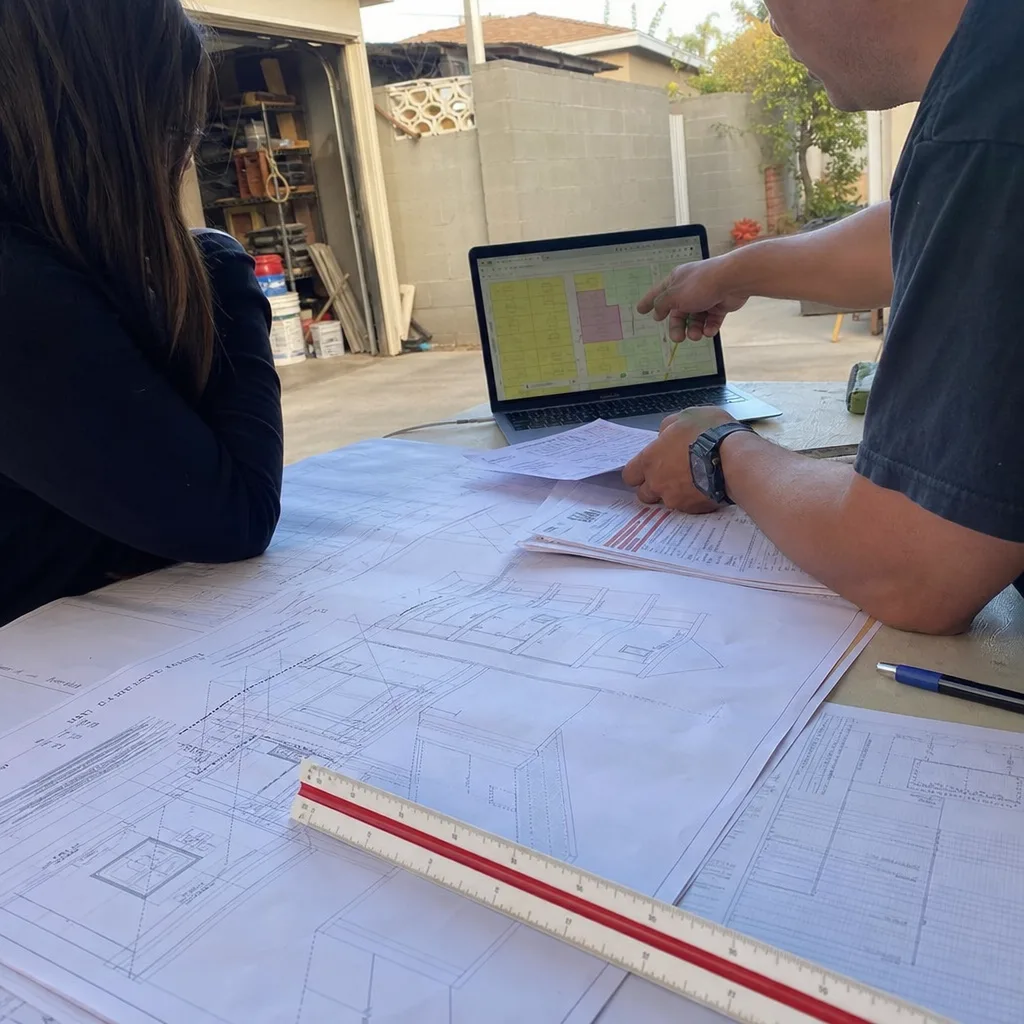
Every project follows a structured Site Assessment sequence. There are no informal assessments that get revised later – the findings we give you in writing at step one are the same findings that anchor the permit set at step four.
- Parcel and title research. We pull your Assessor’s Parcel Number records, confirm your zoning designation with LADBS (Los Angeles Department of Building and Safety), and check whether your parcel falls inside any specific plan, overlay zone, HPOZ, coastal zone, or flood hazard area. This takes two to three business days and produces a written summary you keep.
- CC&R review and California law preemption analysis. You send us your HOA’s current CC&Rs – if you don’t have them, we request them from your association directly. We read every relevant clause and cross-reference it against Civil Code 4751, Government Code 65852.2, and any applicable local ordinances. Where a CC&R clause is preempted by state law, we document the specific statutory cite so you have it in writing.
- Design parameters memo. Before any drawings begin, you receive a one-page written memo stating: maximum allowable ADU size on your lot, height limit, required setbacks, applicable design standards (materials, roof pitch, fenestration if HPOZ applies), and any conditions the HOA is legally permitted to impose. This memo is the foundation of the design – it is not revised after the fact.
- HOA design review package preparation. We prepare the submission package your HOA’s architectural review committee requires: site plan, elevations, material specifications, and a cover letter citing the sections of state law that govern their review authority. For prefab systems like Abodu or Cover, we include manufacturer finish specifications in the package. Most HOA design review processes in Los Angeles take 30 to 60 days; we track the deadline and follow up.
- LADBS permit set coordination. Once HOA approval is in hand (or once we’ve documented that HOA approval is not legally required), we integrate the compliance findings into the full permit drawings. The permit set goes to LADBS with the zoning compliance documentation already attached, which reduces plan-check correction rounds.
- Plan-check response support. If LADBS issues a correction letter related to zoning or setbacks, we respond to it. That’s included. The written price you received at the start covered the project through permit issuance – not just through the first submission.
HOA & Zoning Compliance Pricing in Los Angeles
HOA and zoning compliance work is not a separate line-item invoice at Ellery ADU Studio – it is built into the design-build contract you receive before work starts. That said, the scope of compliance work affects where your project lands in the overall pricing range, so here is what drives cost:
- Standard R1 lot, no HOA, no overlay zone: Compliance research and documentation is the lightest-lift scenario. For a straightforward detached ADU in a neighborhood like Palms, Koreatown, or West Adams – no HPOZ, no specific plan, no HOA – the compliance work is absorbed into the base design-build price without adjustment.
- HOA with architectural review required: Preparing a full HOA submission package, tracking the review period, and responding to committee questions typically adds $800 to $2,500 to the project scope, depending on the complexity of the CC&Rs and whether multiple rounds of HOA review are needed.
- HPOZ or specific plan overlay: Parcels in areas like Hancock Park, Carthay Circle, or the Mulholland Scenic Parkway zone require additional documentation and, in some cases, a Cultural Affairs Department application. Expect $1,500 to $4,000 added to the compliance scope for these situations.
- Coastal zone parcels (Venice, Pacific Palisades, Playa del Rey): Coastal Development Permits add a separate filing layer with the California Coastal Commission or the local coastal program administrator. Compliance work for coastal parcels typically runs $3,000 to $6,000 in additional scope above a standard permit set.
- Variance or appeal: If a setback variance or administrative appeal is required, that is a distinct proceeding with its own filing fees ($1,000 to $4,500 in city fees alone, depending on the type) plus the cost of preparing the variance application and attending the hearing. We quote this separately and in writing if it applies to your parcel.
Whatever the scenario, you receive the written price before work starts – Haven Standard Clause 1 is not conditional on how simple the project turns out to be. If you already have a written estimate from another firm, bring it in: we offer a free second opinion on any written estimate in hand, at no charge and with no obligation.
Why Zoning and HOA Conflicts Derail ADU Projects in Los Angeles
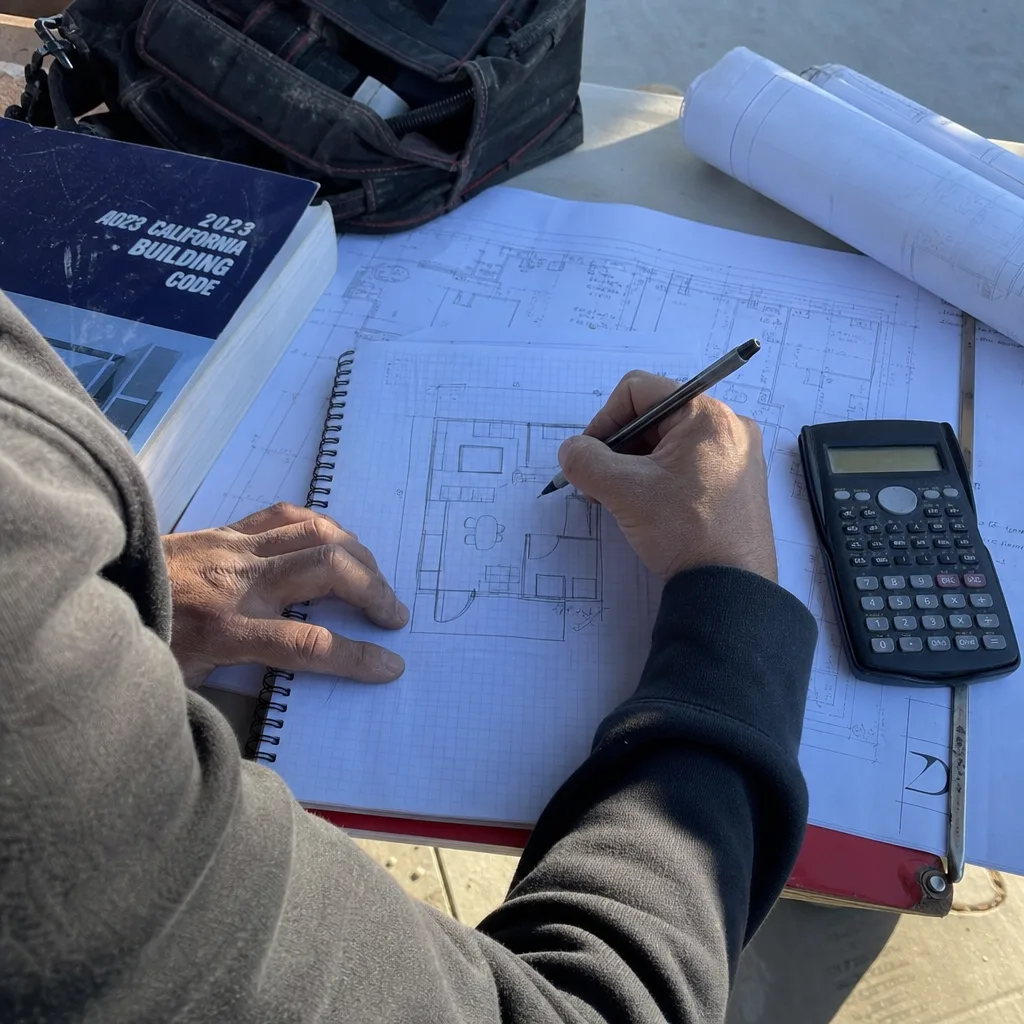
Los Angeles is not one jurisdiction in any practical sense. The city of Los Angeles proper, plus 87 other incorporated municipalities in LA County, each maintain their own zoning codes – and several of them adopted local ADU ordinances that differ meaningfully from LADBS rules. Culver City, for instance, has setback rules for detached ADUs that differ from LA city rules even though the neighborhoods look identical on the ground. Santa Monica imposes owner-occupancy conditions that the state law effectively preempts for most rental ADUs, but the city still tries to enforce them, and homeowners who don’t know their rights often comply unnecessarily.
Overlay zones add another layer. The hillside areas of Bel-Air, Laurel Canyon, and Mount Washington have grading and lot-coverage restrictions that apply independently of the base zoning. An ADU that pencils out on paper at 800 square feet can shrink to 500 square feet once the hillside grading ordinance is applied. We find this during Title 24 Energy Compliance review before you’ve commissioned drawings, not after.
HOAs are a different friction point entirely. California law has progressively stripped HOAs of their ability to block ADUs – but it hasn’t stripped them of all design review authority. An HOA in a planned development like one of the gated communities in Chatsworth or Porter Ranch can still require that your ADU match the primary residence’s roofline, use the same exterior material, or submit to an architectural review committee before construction. None of that is illegal. What is illegal is an HOA flatly denying an ADU application or imposing conditions that make construction financially infeasible. The distinction matters, and it requires someone who has read both the CC&Rs and the statute.
Nadia Ellery has navigated this specific conflict – HOA design authority versus state ADU preemption – on dozens of Los Angeles projects since 2015. The documentation we prepare for HOA boards is written to preempt the objections most committees raise, not to respond to them after the fact.
What You Receive in Writing
Every compliance engagement produces documentation you keep regardless of what happens next. This matters because the research has value even if you decide not to build, or decide to build later:
- Parcel zoning confirmation letter with the applicable code sections cited
- CC&R analysis memo with state law preemption citations where applicable
- Design parameters memo (size, height, setbacks, material requirements)
- HOA submission package (site plan, elevations, material specs, cover letter)
- Documented photo record of any site visit, showing existing conditions relevant to compliance
- Written price for the full design-build scope before any work begins
Under the 365-Day Done Right Promise, if the finished ADU is not built to the permitted drawings – which incorporate all compliance findings – we make it right. That commitment is in the contract before the project starts, not offered after a problem surfaces.
This approach sits within a broader design-build model that covers everything from the first site visit through final inspection, all under one written contract. There is no separate designer to blame if the permit gets a correction, and no separate contractor to blame if the build deviates from the drawings. One contract, one written price, one point of accountability.
FAQs – HOA & Zoning Compliance for ADUs in Los Angeles
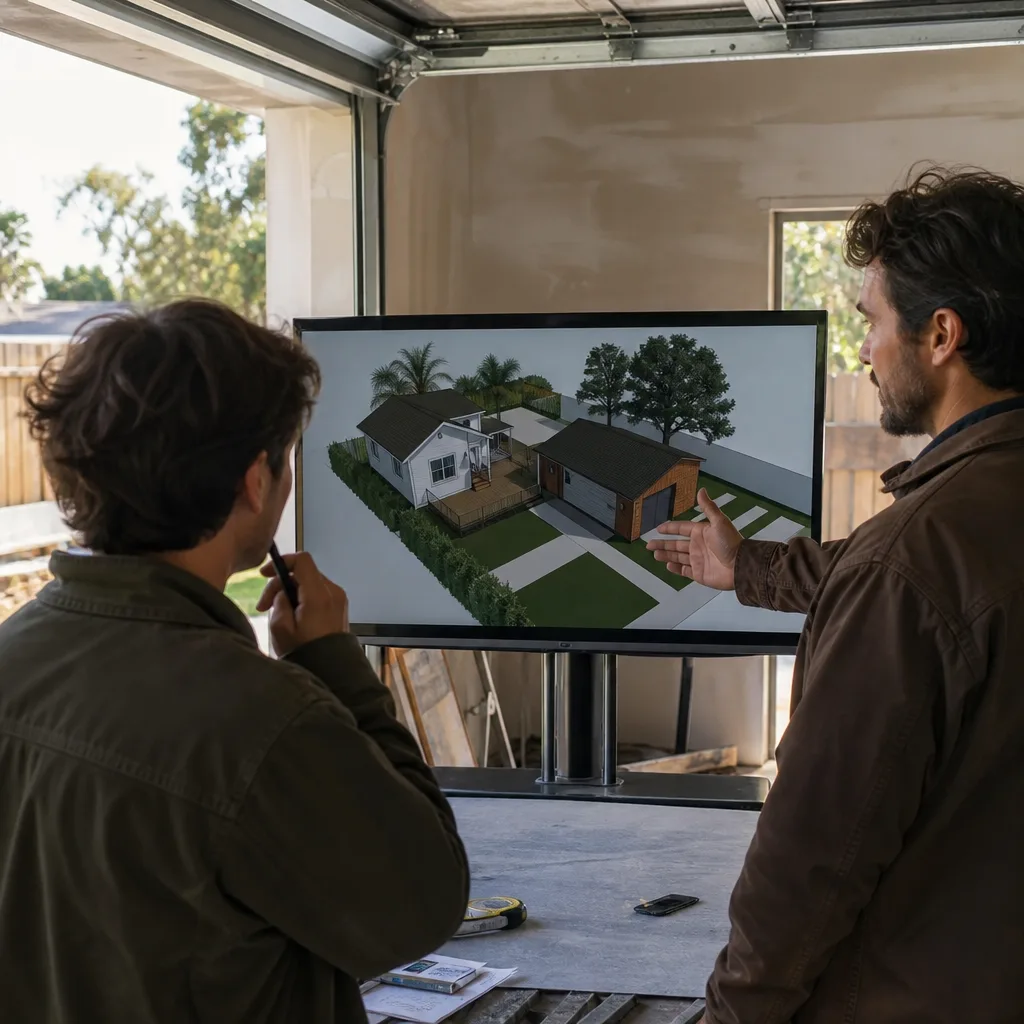
Can my HOA legally block me from building an ADU in Los Angeles?
No – an HOA in California cannot outright prohibit a compliant ADU. Under Civil Code Section 4751 (effective January 2020), any HOA provision that effectively prohibits an ADU is void. Your HOA can impose reasonable design standards – matching materials, compatible rooflines, a formal review process – but it cannot issue a blanket denial, require owner-occupancy as a condition, or set conditions that make construction financially infeasible. If you’ve received a denial letter, the specific objection matters: we’ve seen HOAs confuse their authority with state law and back down once we respond with the statutory cite. Call (424) 551-7706 and we’ll tell you what your letter actually means.
How long does HOA architectural review take in Los Angeles?
Most HOA architectural review committees in Los Angeles are required by their own CC&Rs to respond within 30 to 60 days of a complete submission. If the committee fails to respond within the period specified in the CC&Rs, California law treats the application as approved by default in many cases. We track your HOA’s review deadline as part of our process and follow up before it lapses. The 30-to-60-day window is the primary reason we start HOA review early – submitting the Permit Application to LADBS and the HOA in parallel, where the timeline allows it, saves four to eight weeks on a typical project.
What’s the difference between a setback variance and a nonconforming use exception?
A setback variance is permission to place a structure closer to the property line than the zoning code normally allows – granted by the city after a showing of hardship or unique lot conditions. A nonconforming use exception applies when an existing structure already violates current code (because the rules changed after the structure was built) and you want to modify it without triggering full code compliance. For ADUs in Los Angeles, variances come up most often on hillside lots and narrow infill parcels in neighborhoods like Echo Park and Glassell Park. If your project requires a variance, we quote that proceeding separately in writing before filing anything. Call (424) 551-7706 for a plain-language read of your specific lot situation.
Do HOA rules apply to Junior ADUs (JADUs) inside my primary home?
State law gives HOAs less authority over JADUs than over detached ADUs, because a JADU is contained within the existing structure and doesn’t change the building’s exterior footprint or appearance. In practice, most HOA CC&Rs don’t address JADUs explicitly, which means the state law floor applies: the HOA cannot prohibit it. That said, if your CC&Rs require approval for any interior modification that changes the use of living space, we recommend a written notification to the HOA even if approval isn’t technically required – it’s cheaper than a dispute after the fact. We include that notification letter in our compliance documentation at no additional charge.
Written by Nadia Ellery, Owner at Ellery ADU Studio Los Angeles, serving Los Angeles since 2015.