
Cover Junior ADU Conversion: The Los Angeles Owner’s Guide
Cover junior ADU conversion in Los Angeles typically runs $85,000-$140,000 all-in, drawings through final inspection, with the modular shell and site prep quoted as a single written price before any work begins. We specify and coordinate Cover systems alongside our in-house permit set and site work under one contract, eliminating the designer-versus-builder blame gap that derails most Los Angeles ADU projects. Most Cover junior ADU conversions we handle in Los Angeles move from signed contract to certificate of occupancy in 6-10 months, depending on LADBS plan-check timing and whether your lot requires a setback variance.
Owners usually discover something is off when the Cover shell arrives and the site conditions don’t match the assumptions baked into the original quote: a 4-inch slab that needs to be 6 inches for seismic, a sewer lateral that runs exactly where the bathroom module wants to sit, or a side-yard setback that triggers a Zoning Administrator determination. These aren’t part failures in the traditional sense; they’re integration failures between a precision-manufactured product and a specific Los Angeles lot that has been settling since 1947.
Which Cover Models This Applies To
Cover produces studio and one-bedroom modules designed for accessory dwelling unit deployment. In Los Angeles, we most commonly specify the Cover Studio (320-400 square feet) and Cover One-Bedroom (450-550 square feet) for junior ADU conversions, where an existing attached garage or portion of the main residence is reconfigured rather than building new detached square footage.
Identifying your Cover spec starts with the serial plate, located on the electrical panel door or the structural connection detail sheet that ships with the module. You’ll find the model designation (CV-ST-24 or CV-1B-24 for 2024 production, for example), the seismic zone rating, and the foundation type: slab-on-grade, stem-wall, or the less common pier-and-beam configuration used in hillside Los Angeles zones like Mount Washington or Echo Park. The 2023-2024 Cover modules use a revised connection bracket system (Series B) that is not backward-compatible with the original Series A hardware; mixing the two will fail LADBS structural inspection.
We do not stock Cover OEM modules; we are an independent design-build studio, not affiliated with Cover. What we stock on our trucks and in our Los Angeles warehouse are the critical integration components that fail or mismatch on site: seismic anchor bolts rated for LADBS Zone 4, moisture-barrier flashings for the module-to-existing-wall junction, and the proprietary Cover-to-dwelling connection gasket that must be field-cut to fit existing stucco irregularities. For the module itself, we coordinate factory-direct through Cover’s dealer network, then absorb that unit into our single-contract scope.
Signs Your Cover Junior ADU Conversion Is Failing
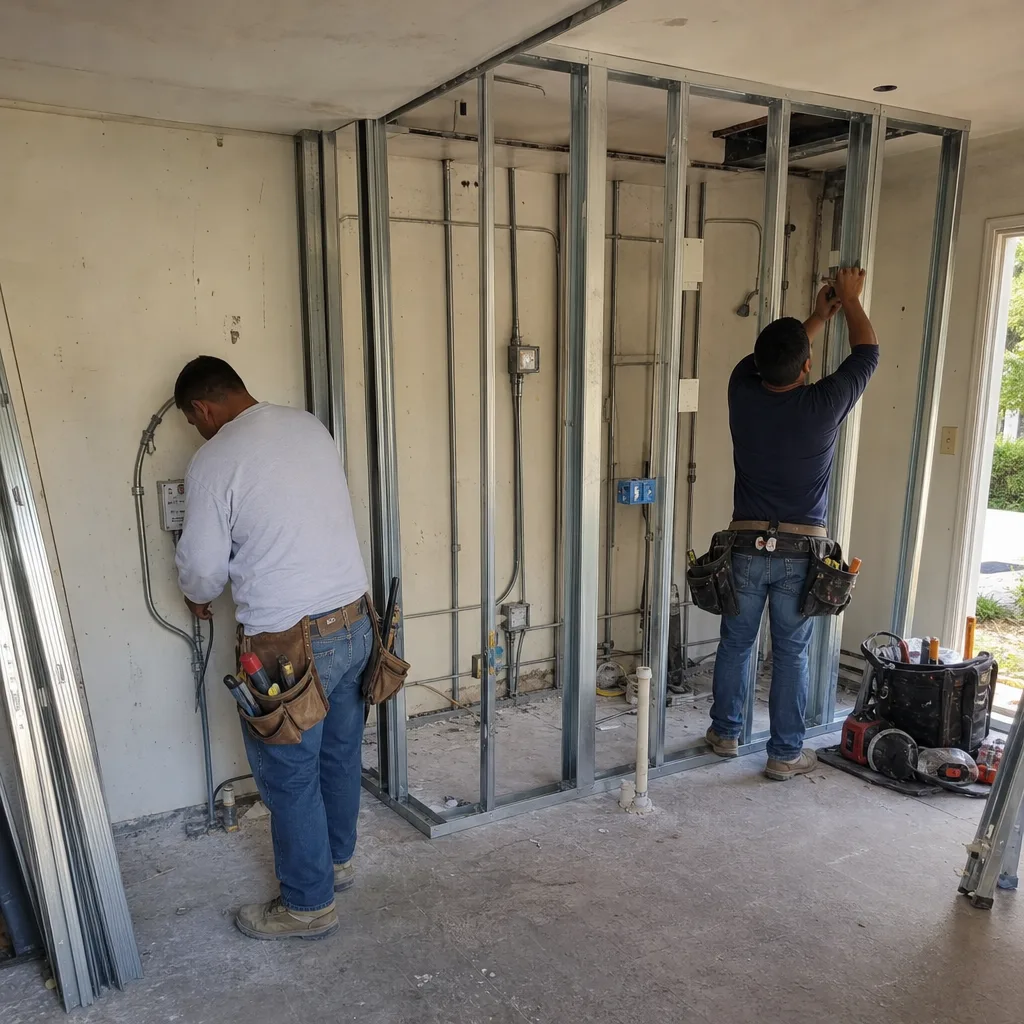
- Moisture intrusion at the module-to-existing wall junction. The Cover gasket system assumes a relatively flat plane. Los Angeles stucco from the 1950s-1980s often has 3/8-inch or greater irregularity. When the gasket can’t seat uniformly, water tracks behind the finish and shows up as staining on the interior drywall, typically 6-12 months after occupancy. We see this most in Atwater Village and Highland Park, where the original construction was owner-built or small-contractor work with minimal lath inspection.
- Structural connector corrosion visible in the crawl space or foundation perimeter. Cover’s Series B brackets are galvanized, but the through-bolts that tie into your existing foundation are often standard hardware-store grade in competitor installations. In Los Angeles coastal zones like Venice or San Pedro, the salt air accelerates corrosion; in inland valleys like Northridge or Van Nuys, the clay soil expansion-contraction cycle works the bolts loose over 18-36 months. Either condition will fail a resale inspection.
- HVAC short-cycling or inability to maintain setpoint. Cover modules ship with a mini-split sized for the module volume alone. In a junior ADU conversion, that module is tied to existing wall mass with different insulation values and thermal bridging at the connection. The system runs constantly, fails to dehumidify adequately, and burns out the compressor prematurely. This is a design integration failure, not an equipment defect.
- Permit red-tag at final inspection for unapproved modifications. Los Angeles Building and Safety inspectors have seen Cover modules field-altered for site conditions: windows moved, doors relocated, structural openings enlarged. Cover’s Type V-B fire rating and prescriptive structural path are engineered as a system; any modification voids the engineering stamp and triggers a full structural re-review. We have inherited three such red-tagged projects in Los Angeles, each requiring $8,000-$15,000 in remedial engineering.
- Utility connection leaks or back-pressure in the sewer lateral. Cover’s wet-wall module assumes a gravity sewer drop of 1/4 inch per foot. Many Los Angeles lots, particularly in the hills or on zero-lot-line configurations common in Koreatown and Westlake, have flat or reverse-pitched laterals. The module plumbing connects perfectly; the site plumbing does not. The symptom is slow drains, gurgling, or sewage odor at the floor drain.
Replacement Cost & What’s Included
Cover junior ADU conversion in Los Angeles, when handled as a remediation of a failed or failing installation, typically runs $45,000-$95,000 for the corrective scope, depending on how much of the original work must be undone. This is not the full conversion price; it is the cost to fix what was done incorrectly while preserving the Cover module itself.
| Line Item | Typical Range (Los Angeles) |
|---|---|
| Structural remediation: brackets, bolts, foundation patching | $8,500-$18,000 |
| Envelope repair: gasket replacement, flashing, stucco integration | $6,000-$12,000 |
| HVAC redesign and equipment resize | $4,500-$9,000 |
| Plumbing reroute or sewer lift pump | $5,000-$14,000 |
| Permit amendment or new plan set (if red-tagged) | $3,500-$7,500 |
| Documented photo record and final inspection coordination | Included in scope |
The range driver is almost always what we find when we open the wall or lift the module edge. A bracket that looked secure from the crawl space may have been installed with improper embedment depth; a gasket that appeared seated may have been compressed unevenly and torn. Under Haven Standard Clause 1, we quote a written price before any corrective work begins, with line-item breakdown. Under Clause 5 (No Surprises), that scope is locked at signing. If we find additional conditions, we document them with photos, present the evidence, and quote the delta separately. You approve it or we stop; there is no automatic upsell.
Our 365-Day Done Right Promise applies to all remediation work: if the finished repair is not built to the permitted drawings, we make it right, in writing, before the project starts. The document either says it or it doesn’t. We make sure it does.
DIY or Call Us?
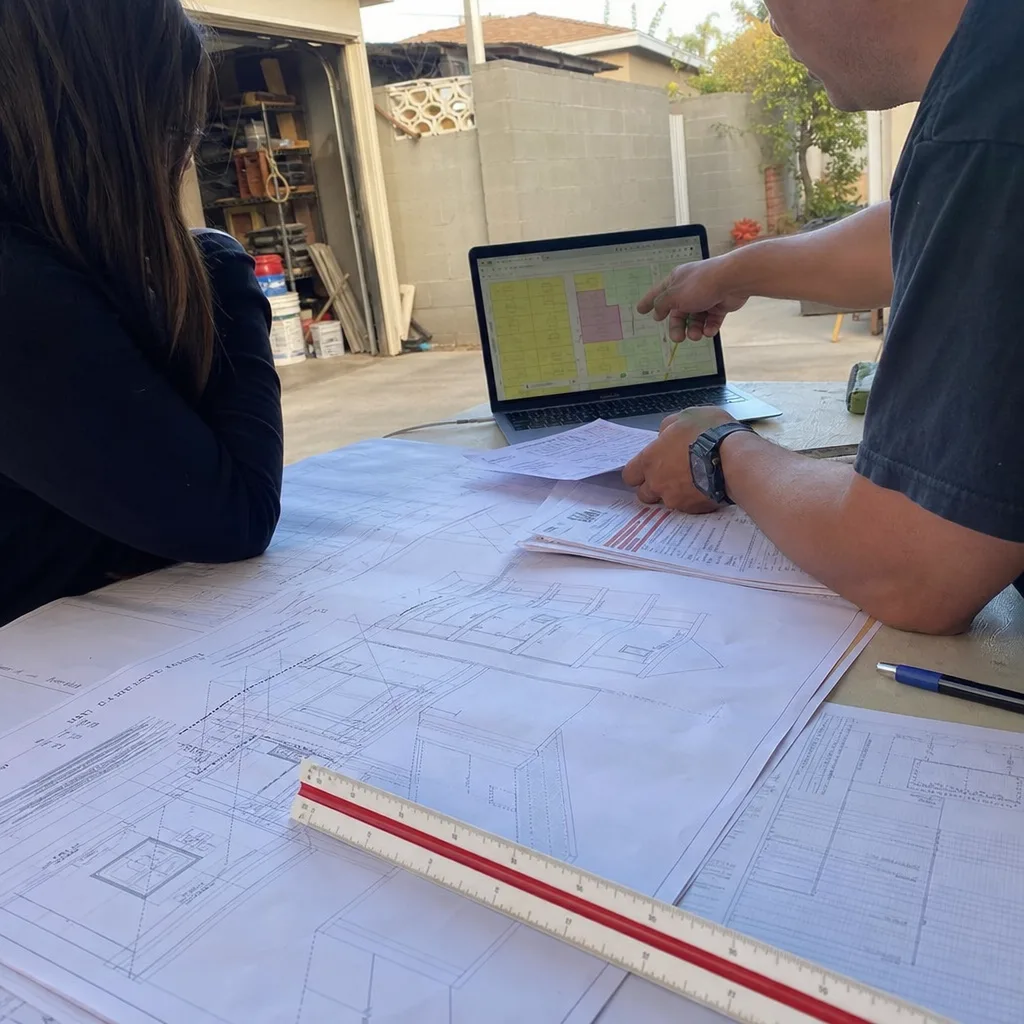
There is no safe DIY path for structural connector replacement or foundation remediation. The Cover module is a prefabricated structural system; its connection to your existing dwelling is engineered for specific loads. Removing or altering a bracket without understanding the shear and uplift forces it resists can compromise the entire assembly. We have seen owner-installed “fixes” with lag bolts into old-growth framing that passed a casual look but would fail catastrophically in a seismic event. Los Angeles requires this work to be performed under a licensed contractor with an active B license and permit; we pull those permits and pass those inspections.
What you can safely check: the serial plate location and model designation, the condition of exposed gasket material at the module exterior, and whether your original contractor provided a documented photo record of the connection work. If any of those three items is missing or deteriorated, call (424) 551-7706. We will schedule a site walk, produce a written assessment with photos, and quote a corrective scope if needed. Estimates for assessment are free; the assessment itself is a flat fee credited to any work we perform.
FAQs
A properly integrated Cover module should perform for 50+ years on the structural side, with envelope components (gaskets, flashings, sealants) requiring inspection and selective replacement at 15-20 year intervals. The Los Angeles sun and Santa Ana wind cycles are harder on exterior sealants than the Bay Area or Pacific Northwest climates Cover also serves. Call (424) 551-7706 to schedule an inspection if your installation is approaching the 15-year mark.
Most integration failures are repairable without module replacement. The exception is structural modifications made to the module itself after it left the factory; those void the engineering stamp and typically require either factory re-certification (rare and expensive) or module replacement. We assess this in our initial site walk and tell you which category you’re in before you spend money. Call (424) 551-7706 for a free estimate.
Unpermitted or red-tagged remediations in Los Angeles typically run 4-7 months: 3-5 weeks for the revised permit set, 6-10 weeks for LADBS plan check, and 6-8 weeks for construction and inspection. If no permit amendment is needed and we’re correcting workmanship only, 3-5 weeks is typical. We quote a schedule range in writing, not a single date. Call (424) 551-7706 for specifics on your project.
We stock the critical integration hardware that fails most often in Los Angeles conditions: seismic anchors, moisture barriers, and connection gaskets in the common Cover module widths. The module itself is factory-ordered with a 10-14 week lead time. For emergency envelope failures, we can often install temporary weather protection same day while the permanent solution is sourced. Call (424) 551-7706 to confirm stock for your specific model.
Ready to fix your Cover junior ADU conversion right? Call (424) 551-7706 to schedule your free estimate. Every project receives a written price before work starts, a documented photo record on every visit, and the full backing of The Haven Standard. Nadia Ellery and our team serve Los Angeles and nearby areas.
Written by Nadia Ellery, Owner, Ellery ADU Studio Los Angeles at Ellery ADU Studio Los Angeles, serving Los Angeles and nearby areas.